
Static Site Generators Explained
A static site generator (SSG) compiles raw data and templates into pre-built HTML pages during the build process, offering enhanced security, speed, and reduced server load.

ON THIS PAGE
0% read
- Defining the Static Site Generator (SSG)
- The Mechanics of Pre-Rendering: How SSGs Work
- Strategic Advantages for Enterprise Infrastructure
- Operational Limitations and Cautionary Factors
- Architectural Comparison: SSG vs. Traditional CMS vs. Headless CMS
- Evaluating the Market: Industry-Standard SSG Frameworks
- Conclusion: Making an Informed Infrastructure Decision
Modern web architectures demand a fundamental shift in how digital experiences are delivered, optimized, and secured. Choosing the right rendering strategy directly impacts long-term maintenance costs, operational scalability, and digital performance. This guide, focusing on Static Site Generators Explained, breaks down the core concepts, technical mechanics, and commercial implications of pre-rendered web infrastructure. By decoupling content generation from client-side execution, technology decision-makers can bypass traditional database dependencies, thereby improving loading times and narrowing potential cybersecurity vulnerabilities. Understanding how static site generators operate enables organizations to align their engineering capabilities with business KPIs like conversion rates and hosting efficiency.
Defining the Static Site Generator (SSG)

What is a Static Site?
A static site consists of pre-compiled, flat files—mainly HTML, CSS, JavaScript, and asset files like images—stored on a server or distributed directly through a Content Delivery Network (CDN) [RAG]. Unlike dynamic sites, there is no real-time database query processing or server-side rendering (SSR) occurring when a user requests a page. Each visitor receives the exact same pre-built file, eliminating the need for application servers like Node.js or PHP runtimes to assemble layouts on the fly. This architecture minimizes latency and mitigates common runtime errors associated with web application hosting.
Historically, static websites were hand-coded, which became unmanageable as content scaled. Modern static sites, however, utilize automated build steps to generate these files, combining the developer ergonomics of templating engines with the raw performance of flat-file delivery. This represents a structural departure from traditional monolithic environments where page construction is coupled with user access.
Key Characteristics of SSGs
An SSG acts as the compiler for the web. It takes raw files (typically written in markup languages like Markdown) and runs them through a templating engine (such as Liquid, Nunjucks, or JSX) to output complete, production-ready directories of HTML files. The process occurs entirely during development or continuous integration (CI) phases, meaning the heavy computational lifting is shifted away from the user's browser or the production hosting server [RAG].
The defining characteristics of an SSG include:
Decoupled Architecture: The content creation environment and build system are separated from the public-facing deployment environment.
Flat-File Output: The compilation results in independent documents containing all necessary structure and styling, ready for static hosting.
Git-Centric Workflow: Code and content often live in version control systems, establishing a clear audit trail for every change.
This separation means that even if the developer environment or content editor tool goes offline, the public-facing application remains fully functional and accessible to users worldwide.
The Core Principle of Pre-built HTML
Pre-built HTML represents a design choice that prioritizes predictable runtime behavior. Traditional systems build the requested web page when the client connects, requiring database queries, template compilation, and server computation. If a database bottleneck occurs, the Time to First Byte (TTFB) spikes, leading to slower page loads and degraded user experience.
With pre-built HTML, the compilation work is completed before the first user visits [RAG]. The resulting static files are cached at edge nodes across a CDN globally. When a user requests a page, the closest edge node serves the file immediately. This mechanism bypasses traditional server-side execution entirely, drastically reducing latency and providing consistent performance regardless of traffic volume.
The Mechanics of Pre-Rendering: How SSGs Work
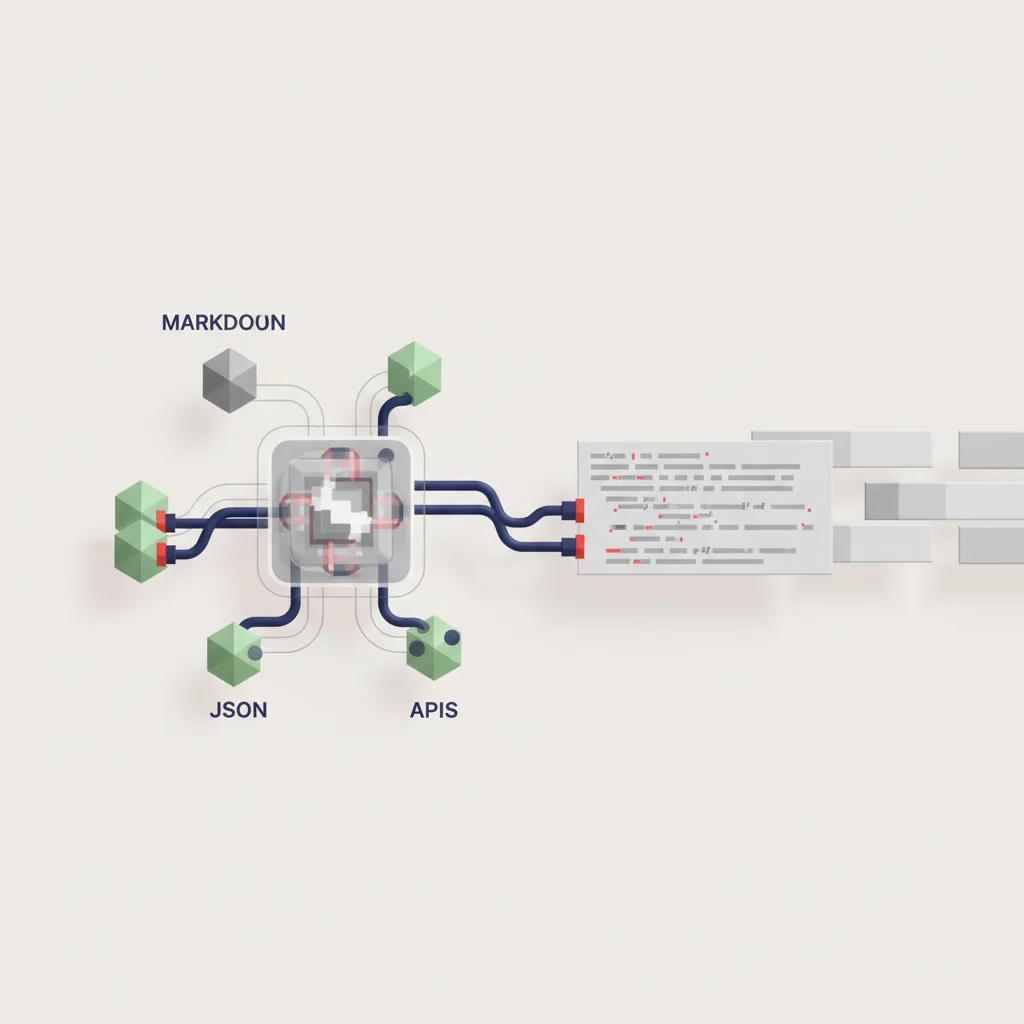
The Build Process vs. Runtime Execution
Understanding the distinction between build time and runtime is crucial for evaluating SSG architecture. During the build process, the generator parses all data inputs—including Markdown documents, JSON files, and APIs from headless CMS platforms—and merges them with structural templates. This stage is computationally expensive, but it occurs in isolated environments like GitHub Actions, GitLab CI, or Vercel build servers.
In contrast, runtime execution in a pure static model is minimal. When a user navigates to the site, the browser requests the pre-built HTML and executes client-side JavaScript to handle interactive elements, such as search bars or dynamic forms. This shifts the performance burden away from the origin server, resulting in near-instantaneous page delivery.
The Role of Raw Data, Markdown, and Templating Engines
At the heart of the SSG workflow lies the transformation of raw data. Content creators write articles or documentation in Markdown, a lightweight markup language that separates content from visual presentation. Developers construct templates using engines like Go templates, Nunjucks, or React/Vue components.
The generator maps raw data fields (often defined in YAML front-matter at the top of Markdown files) to the corresponding placeholders in templates. For example, a metadata block containing a title, publish date, and author is automatically injected into the page header. This division of labor allows editors to work in simple text interfaces while developers maintain the structural code independently.
CI/CD Pipelines in SSG Workflow
To bridge the gap between static compilation and dynamic content updates, SSGs rely heavily on Continuous Integration and Continuous Deployment (CI/CD) pipelines. In a typical enterprise setup, any change to the repository—whether a code modification by a developer or a content update by an editor—triggers an automated pipeline.
The pipeline checks out the latest version from Git, installs dependencies, executes the build command of the static site generator, runs automated testing suites (such as accessibility checks or dead-link scanning), and pushes the updated static assets to the distribution network. The entire lifecycle is automated, ensuring that content delivery is both reliable and standardized.
Strategic Advantages for Enterprise Infrastructure
Enhanced Security Posture and Attack Surface Reduction
For security-conscious enterprises, minimizing the digital attack surface is a primary objective [RAG]. Traditional content management systems rely on dynamic servers running PHP, Python, or Node.js, backed by active SQL databases. Each of these components represents a potential vector for security exploits, such as SQL injections, cross-site scripting (XSS), or remote code execution.
An SSG-driven architecture eliminates these entry points. Because there is no database or active application server connected to the public web interface, malicious actors cannot query backend databases or execute malicious scripts on the server. The files are hosted on read-only cloud storage or CDN edges, making server-side hacking virtually impossible and greatly simplifying compliance with frameworks like ISO 27001 or SOC 2.
Superior Loading Speeds and Core Web Vitals
Google's ranking algorithms heavily weigh page experience, quantified through metrics known as Core Web Vitals. Specifically, Largest Contentful Paint (LCP) and Cumulative Layout Shift (CLS) are critical. SSGs excel in these metrics because they eliminate database query delays and complex backend computations that typically bloat Time to First Byte (TTFB).
By delivering lightweight, pre-optimized static files over a geographically distributed CDN, pages are loaded in milliseconds. The absence of heavy client-side JavaScript execution (when using clean SSG setups like Eleventy or Hugo) also reduces First Input Delay (FID), creating a frictionless, responsive browsing experience that directly correlates with higher search visibility and user retention.
Reduced Server Load and Predictable Hosting Costs
Scaling a traditional dynamic website to handle massive traffic spikes requires expensive infrastructure scaling policies, including load balancers, database replication, and complex caching layers. These systems introduce operational complexity and high, unpredictable hosting bills.
Static sites, on the other hand, require minimal computational resources [RAG]. Serving static files from a CDN costs a fraction of the price of running dedicated application servers. Even under extreme traffic loads, the bandwidth consumption is highly predictable, and there are no CPU bottlenecks to worry about, resulting in a robust infrastructure that remains highly cost-effective at scale.
Operational Limitations and Cautionary Factors
Scaling Challenges: Extended Build Times for Large-Scale Sites
While SSGs offer unmatched delivery speeds, they present unique challenges when scaling to tens of thousands of pages. Because every page must be pre-compiled, the overall build time increases proportionally with the amount of content. A site with 50,000 product pages can take hours to compile on standard CI/CD servers, delaying critical content updates or price changes.
To combat this, modern frameworks employ strategies such as Incremental Static Regeneration (ISR) or partial pre-rendering. However, these methods reintroduce server-side complexity or require specialized hosting providers, partially undermining the simplicity of the pure static model.
Managing Dynamic Content and User Personalization
By default, static sites serve identical pre-built files to every visitor. This makes real-time personalization, user-specific dashboards, and dynamic content (such as shopping carts, live comments, or geo-targeted pricing) challenging to implement.
Handling interactivity requires integrating client-side APIs, serverless functions, or third-party SaaS widgets. While this Jamstack approach preserves the static core, it increases reliance on external services and requires robust client-side state management, demanding specialized engineering expertise to maintain system cohesion.
The Dependency on Technical Workflows and Learning Curve
Transitioning to a static site generator often introduces friction for non-technical content editors. Unlike traditional monolithic systems with intuitive visual drag-and-drop editors, SSGs typically require familiarity with Markdown, YAML configuration, and Git repositories.
While headless CMS integrations can restore a user-friendly editing interface, configuring these integrations requires initial developer setup. Organizations must evaluate whether their marketing and content teams possess the technical literacy or patience to adapt to these structured Git-based workflows.
Balancing the engineering advantages against the operational challenges of static generation. Pros 2 advantages Near-Zero Security Vulnerability Bypassing backend database access removes the risk of traditional web server attacks. Cost-Effective Edge Scaling Global CDN hosting eliminates the need for expensive, autoscaling runtime server groups. Cons 2 concerns Long Compilation Times Large-scale sites face bottleneck risks during full rebuild processes in CI/CD pipelines. Complex Personalization Setup Real-time user profiles and dynamic features require custom frontend integrations or APIs.SSG Structural Pros & Cons
Architectural Comparison: SSG vs. Traditional CMS vs. Headless CMS

Where Monolithic CMS (e.g., WordPress) Still Succeeds
Monolithic CMS platforms unify content creation, database storage, and front-end presentation within a single system. This tightly coupled architecture remains highly effective for rapid prototyping, small business sites, and teams that require extensive plugins without writing custom code.
For projects with frequent, unstructured content updates and minimal technical overhead, a traditional CMS provides an accessible solution. The dynamic nature of monolithic setups allows for out-of-the-box user registration, built-in search, and instantaneous publishing without waiting for a build pipeline to complete.
Bridging the Gap: SSGs Paired with Headless Content Management
To combine the performance of static sites with the editorial comfort of traditional platforms, enterprises increasingly turn to a headless CMS architecture. In this hybrid model, the CMS is used solely for content input and editing, exposing the data via REST or GraphQL APIs.
The static site generator then queries these APIs during the build process to retrieve the latest content and build the final pages. This approach satisfies both developers, who gain full architectural control and performance, and content editors, who continue using an intuitive, visual dashboard without interacting with raw code or version control.
Key Differences in Content Management Approaches
The core difference lies in when and where content is rendered. Traditional systems assemble the layout on the database server during the user's request. Headless architectures decouple the presentation entirely, allowing various front-ends (including mobile apps and smart TVs) to consume the same raw data.
Evaluating these approaches requires analyzing project complexity, long-term maintenance budgets, and security parameters. While a static approach requires a higher initial technical investment, it yields much lower operating costs and far fewer security concerns over time compared to active monolithic databases.
Evaluating the Market: Industry-Standard SSG Frameworks
Next.js and the React Ecosystem
Next.js has become one of the most popular frameworks for enterprise-grade web development. Created and maintained by Vercel, it supports static site generation alongside server-side rendering (SSR) and Incremental Static Regeneration (ISR). This hybrid capability makes it incredibly versatile for platforms that need both static landing pages and fully dynamic dashboard components.
The rich React ecosystem allows developers to build highly interactive user interfaces. However, Next.js demands a high level of Javascript expertise and is best suited for organizations with dedicated development teams capable of managing complex Node.js dependencies and modern development workflows.
Hugo: Prioritizing Build Speed with Go
Written in Go, Hugo is celebrated as one of the fastest static site generators available. It can compile thousands of pages in milliseconds, making it an excellent choice for massive content sites, technical documentation hubs, and blogs where build pipeline efficiency is a priority.
Hugo uses simple HTML templates with its own syntax and does not rely on heavy JavaScript frameworks like React or Vue. This results in incredibly lightweight output files that load extremely fast. The trade-off is a steeper learning curve for developers unfamiliar with Go's templating conventions.
Jekyll: The Foundation of GitHub Pages
Jekyll is one of the oldest and most established static site generators, popularized by its native integration with GitHub Pages. Written in Ruby, it remains widely used for simple project documentation, personal blogs, and educational resources.
While it lacks the advanced performance optimizations and hybrid capabilities of newer JavaScript frameworks, Jekyll's simplicity and massive community support make it highly reliable. Its straightforward folder structure and Liquid templating are easy to grasp, though build times can slow down significantly on larger projects.
Eleventy (11ty): Framework-Agnostic Simplicity
Eleventy is a highly flexible, zero-config static site generator that does not force developers to adopt a specific JavaScript framework. It allows the use of multiple templating engines (including Markdown, Liquid, Nunjucks, and Handlebars) within the same project.
By avoiding heavy client-side JavaScript bundles by default, Eleventy ensures that the generated websites are incredibly fast and fully accessible. It is ideal for content-heavy sites where clean, semantic HTML is preferred over complex client-side application logic.
Conclusion: Making an Informed Infrastructure Decision
Key Takeaways for IT Leaders
Adopting a static site generator is a strategic architecture decision that goes beyond simple page speed. It represents a commitment to a modern development workflow that decouples content from presentation, reducing operational risk and optimizing infrastructure spend. For organizations looking to protect their brand from security breaches, stabilize their cloud hosting budgets, and improve organic search performance, pre-rendered architectures present a highly compelling alternative to traditional legacy databases [RAG].
IT leaders must weigh the initial development setup cost and the transition curve for editorial staff against the long-term savings in hosting, maintenance, and security monitoring. In most cases, the structural resilience gained far outweighs the initial engineering investment.
Future Trends in Static Site Generation
The future of static site architecture lies in hybrid rendering models. Frameworks are moving away from all-or-nothing approaches, allowing developers to choose static generation for marketing pages, server-side rendering for personalized dashboards, and incremental regeneration for dynamic catalog updates.
Additionally, as edge computing platforms become more sophisticated, the line between static and dynamic continues to blur. Edge networks can now modify static HTML on the fly based on user geography or preferences, offering the lightning-fast performance of pre-rendered files combined with the rich customization of traditional dynamic systems.
Frequently Asked Questions
Is WordPress considered a static site generator?
No, WordPress is a dynamic, monolithic CMS that relies on a runtime database and PHP server to construct pages when a user visits. However, you can use specialized plugins to export WordPress content into static HTML files, effectively using it as a data source for static hosting.
Can a static site utilize a database?
A static site does not connect to a live backend database at runtime. Instead, it queries databases during the build process to generate static pages, or uses client-side JavaScript to fetch data from third-party APIs and serverless databases once the page is loaded.
When should an enterprise avoid using an SSG?
Enterprises should avoid pure SSGs for applications that require highly personalized, real-time user experiences, such as active social networks, complex SaaS dashboards, or e-commerce stores with rapidly changing stock inventories that cannot tolerate build-step delays.
What is the main difference between static and dynamic sites?
Static sites deliver pre-built, flat HTML files directly from a CDN to the user, bypassing runtime database queries. Dynamic sites generate the HTML on the server in real-time for each individual request, requiring continuous backend processing.
Do static sites require web servers to run?
Static sites do not require traditional application web servers running PHP or Node.js. They can be hosted directly on static storage buckets or Content Delivery Networks (CDNs) like Cloudflare, Netlify, or Vercel, which simply serve the pre-compiled files.
How do you update content on a static site?
Content updates are made by modifying the raw files in a Git repository or updating data within a headless CMS. These actions trigger a webhook that launches an automated CI/CD pipeline, rebuilding the static files and deploying them to the CDN.
Are static site generators good for SEO?
Yes, SSGs are exceptional for SEO because they produce highly optimized, fast-loading HTML pages. Improved loading times and clean code structures directly contribute to better search engine indexing and higher Core Web Vitals scores.
What is the Jamstack architecture?
Jamstack is a modern web development architecture based on JavaScript, APIs, and Markup. It relies on static site generators to pre-render the markup, using APIs and serverless functions to handle dynamic, client-side functionality.