
What Are Multi-Agent Systems?
Multi-agent systems (MAS) involve multiple interacting, autonomous AI agents. They collaborate to solve complex, distributed tasks beyond the capabilities of a single model.

ON THIS PAGE
0% read
- Understanding Multi-Agent Systems in Enterprise AI
- How Multi-Agent Systems Work: The Architecture
- Single-Agent Systems vs. Multi-Agent Systems
- High-Impact Corporate Use Cases for MAS
- The Strategic Benefits of Multi-Agent AI
- Critical Risks and Challenges of Deploying MAS
- Best Practices for Implementing MAS in Enterprise Environments
- Conclusion: Navigating the Future of Agentic AI Safely
Multi-agent systems represent a paradigm shift in distributed artificial intelligence, where specialized autonomous AI agents collaborate to execute workflows that exceed the operational limits of any single large language model. For enterprise decision-makers, understanding how these systems coordinate, communicate, and scale is vital for moving beyond basic prompt-and-response interfaces into resilient, automated operations. This guide analyzes the architectural components, real-world deployment patterns, integration requirements, security protocols, and cost structures necessary to build and govern multi-agent architectures safely.
Understanding Multi-Agent Systems in Enterprise AI
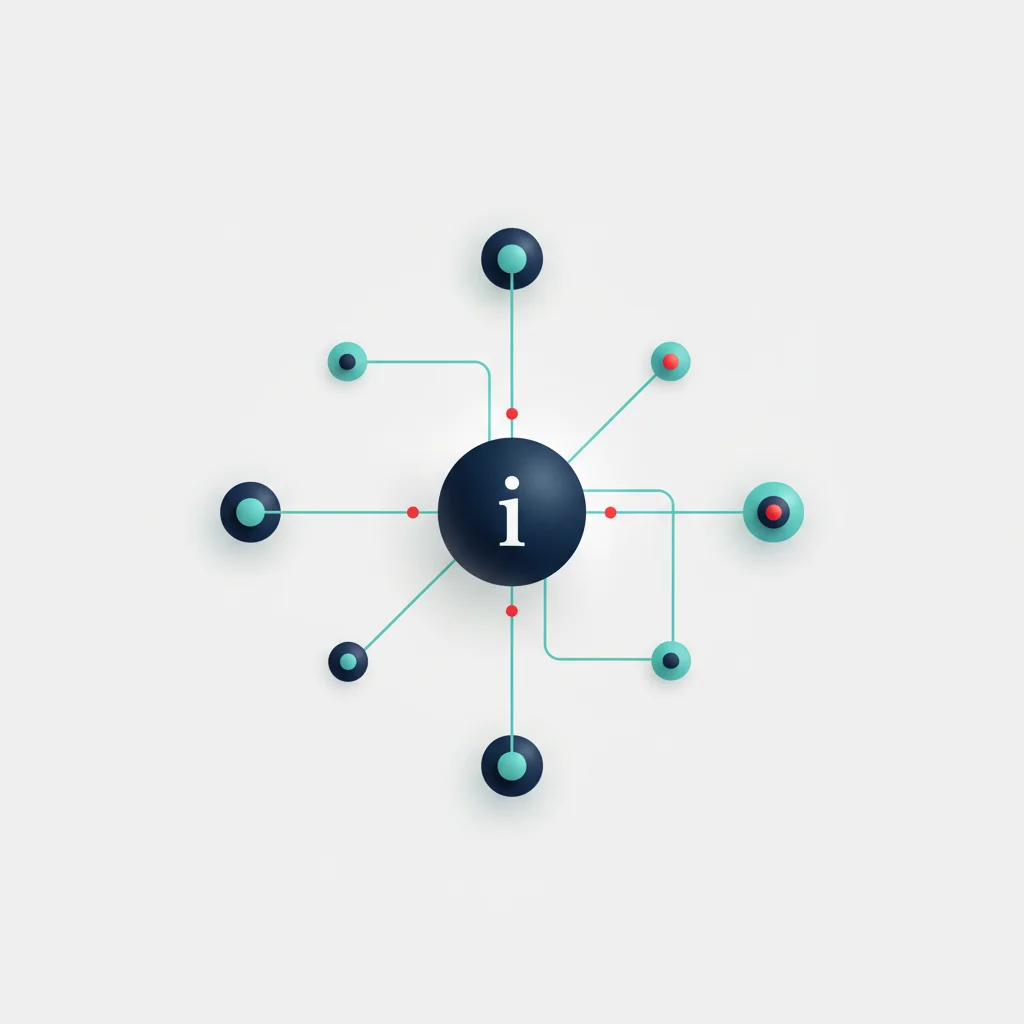
The Shift from Single Models to Collaborative AI
Standard deployments of large language models (LLMs) operate primarily on linear input-output paradigms. A single prompt goes in, and the model attempts to generate a comprehensive output using its internal weights and any contextual data provided via Retrieval-Augmented Generation (RAG). While highly effective for simple drafting, code generation, or search assistance, this monolithic approach degrades when confronted with complex, multi-layered business processes. A single model must balance context window constraints, instruction-following limits, and the tendency to hallucinate when forced to process conflicting sub-tasks simultaneously.
The transition to agentic workflows addresses these limitations by decomposing monolithic processes into modular, focused operations. In a collaborative multi-agent framework, rather than demanding that a single LLM analyze a 100-page regulatory document, write a compliance report, cross-reference it with internal security logs, and format an email notification, these steps are divided among specialized agents. Each agent is configured with a narrow persona, explicit system prompts, tailored tool access, and dedicated vector databases.
By distributing the cognitive load, enterprises can leverage smaller, more cost-effective, or fine-tuned models for specific sub-tasks while reserving larger, more expensive frontier models for high-level orchestration. This modularity reduces context dilution, as each model only receives the specific, filtered information necessary to execute its assigned function. The output of one specialized agent becomes the highly structured input for the next, establishing a deterministic, inspectable pipeline of collaborative artificial intelligence.
Core Characteristics of Autonomous Agents
To function effectively within a multi-agent system, an individual agent must possess several core architectural characteristics. First, it must exhibit autonomy, meaning it can make independent decisions regarding which tools to execute and when its assigned task is complete. This is governed by prompt frameworks like ReAct (Reasoning and Acting), which enable the agent to generate reasoning traces, plan action steps, observe tool outputs, and adjust its trajectory without continuous human intervention.
Second, agents require a structured memory layer. This is divided into short-term memory, which maintains the state and conversation history of the active workflow, and long-term memory, typically backed by a vector database or a persistent graph database. Long-term memory allows the agent to recall historical executions, user preferences, and specialized domain knowledge across different sessions.
Finally, agents must have access to tools, which are exposed via standardized APIs. These tools allow agents to interact with the physical and digital world, executing actions such as querying a SQL database, pulling real-time market data from an external endpoint, or running python code in a sandboxed execution environment.
---
How Multi-Agent Systems Work: The Architecture
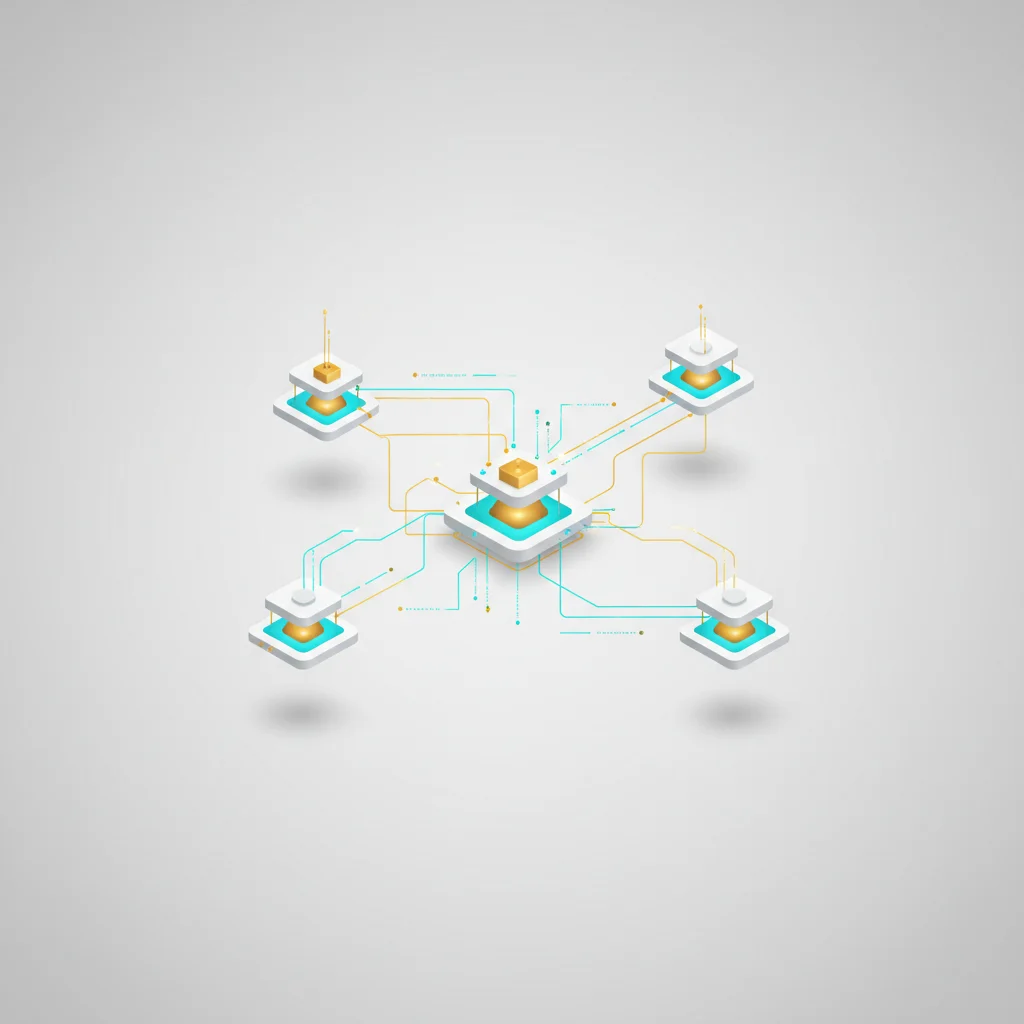
Agent Orchestration and Communication Protocols
In a multi-agent system, agents cannot operate in isolation; they must communicate through formal, standardized protocols. These protocols define how information is packaged, routed, and validated between nodes. Unlike human conversations, agent communication is highly structured, frequently relying on data exchange formats such as JSON or Protocol Buffers. Frameworks like AutoGen, CrewAI, and LangGraph abstract these communication layers, enabling developers to define state charts, routing graphs, and message passing queues.
The architecture typically utilizes one of two orchestration methodologies: hierarchical orchestration or choreography. In a hierarchical structure, a central "manager" or "orchestrator" agent receives the primary user prompt. This orchestrator decomposes the high-level goal into sub-tasks, assigns them to specialized subordinate agents, monitors their execution, resolves conflicts, and aggregates the final response. This pattern is highly effective for deterministic business processes where strict quality control and predictable execution paths are required.
Conversely, in a choreographed system, agents operate peer-to-peer without a centralized controller. They subscribe to shared event streams or message buses (such as Apache Kafka or RabbitMQ) and trigger their internal workflows when they detect specific events or data patterns. Choreography allows for highly dynamic, decentralized problem solving, where the system can adapt to unexpected inputs or operational failures without a single point of failure in the orchestration layer.
Cooperative vs. Competitive Agent Environments
The social dynamics within a multi-agent environment can be configured as either cooperative or competitive, depending on the desired outcome. In a cooperative environment, all agents share a common objective function. They actively exchange intermediate reasoning steps, validate each other's outputs, and share access to common databases. For example, a software engineering multi-agent system features a product manager agent, a coder agent, and a tester agent working collaboratively to write, debug, and verify code. The success of one agent is directly tied to the collective output of the team.
Competitive environments, on the other hand, utilize adversarial dynamics to optimize outputs, find edge cases, or test security postures. In these setups, agents operate with opposing objective functions. A classic implementation is a red-team/blue-team dynamic in cybersecurity: one agent is tasked with discovering and exploiting vulnerabilities in a mock application, while a defending agent is tasked with patching the code and detecting the attack vectors.
Similarly, in financial trading simulations, competitive agents can represent different market actors with conflicting interests, allowing organizations to run complex stress tests and observe emergent system behaviors under varying market conditions.
Decentralization and Distributed Problem Solving
Distributed Artificial Intelligence (DAI) principles underpin the decentralized nature of multi-agent systems. When dealing with distributed problem solving, the system divides a massive problem space among agents that may be running on geographically separated cloud infrastructure or edge devices. This architectural approach avoids the bottlenecks associated with centralized data processing and allows for localized decision-making.
In decentralized architectures, consensus mechanisms must be established to ensure that agents agree on the state of the system or the validity of a transaction. While traditional distributed computing relies on consensus algorithms like Raft or Paxos, AI multi-agent systems often use semantic consensus. This involves agents evaluating the qualitative outputs of other agents using semantic similarity scores, cross-verification prompts, or programmatic validation scripts.
If an agent's output falls below a pre-configured semantic confidence threshold, the system triggers automated feedback loops, requiring the generating agent to refine its work before it propagates further through the decentralized network.
---
Single-Agent Systems vs. Multi-Agent Systems
Limitations of Single-Agent Workflows
While single-agent systems—such as a single LLM paired with basic RAG—are straightforward to build and maintain, they face hard architectural limits when scaled to enterprise workloads. The first major bottleneck is context window saturation. As a single agent interacts with a user, retrieves documents, and executes tools, its prompt history grows. This accumulation of tokens leads to "loss in the middle" phenomena, where the underlying model begins to ignore critical instructions or retrieved data points placed in the middle of a massive context window.
Furthermore, single-agent architectures suffer from high task-switching costs. When one model is forced to switch between logical reasoning, mathematical calculation, code generation, and tone-matching within a single inference step, its performance across all tasks drops.
This often manifests as compounding errors: if the agent makes a minor logical mistake in step two of a ten-step process, it has no native mechanism to catch that error, resulting in a completely incorrect final output. The single-agent model lacks internal checks and balances, requiring human-in-the-loop validation for almost every step of a complex business process.
Why Enterprises Are Adopting MAS (Scalability and Fault Tolerance)
Multi-agent systems solve these limitations by introducing structural scaling and robust fault tolerance. From a scalability perspective, MAS allows organizations to scale processing horizontally. Because each agent is a modular component, developers can scale the compute resources of individual agents independently.
For instance, an agent tasked with high-volume database extraction can be run on optimized, low-cost serverless pipelines, while the high-level synthesis agent runs on a high-availability server with access to premium, high-latency models.
[Monolithic Single Agent] ──> Processes All Tasks ──> High Error/Hallucination Risk

               ┌──> [Compliance Agent] ──> Validates Data ──┐
[Multi-Agent]  ├──> [Security Agent]   ──> Scans Vulnerabilities ─┼─> Clean output
               └──> [Analytics Agent]  ──> Generates Reports ─────┘
Fault tolerance is another critical factor driving enterprise adoption. In a single-agent system, if the model encounters an API timeout, an unexpected database schema, or a syntax error during tool execution, the entire session terminates or fails.
In a multi-agent architecture, the system can isolate the failure. If a data collection agent fails to fetch an external resource, the orchestrator agent can catch the exception, dynamically spin up an alternative agent with access to a fallback data source, or instruct the failing agent to retry with modified parameters, preserving the overall workflow's integrity.
A direct comparison of operational dynamics, development overhead, and reliability profiles. Pros 2 advantages Multi-Agent Fault Tolerance Individual agent failures are isolated, allowing automated recovery and continuous processing. Modular Scalability Specialized agents can be individually updated, scaled, or replaced without breaking the system. Cons 2 concerns Increased Integration Latency Multiple sequential model calls and agent communications naturally increase response times. Higher Computational Overhead Cascading agent conversations consume more API tokens and require robust state tracking.Architectural Trade-Offs: Single vs. Multi-Agent
---
High-Impact Corporate Use Cases for MAS
Supply Chain Optimization and Logistics
Enterprise supply chains are highly distributed, non-linear systems influenced by real-time variables such as weather, geopolitical developments, labor disputes, and fuel fluctuations. Multi-agent systems are uniquely suited to manage this complexity.
In a modern supply chain MAS, individual agents are assigned to specific roles: a Sourcing Agent monitors supplier inventory and material costs; a Logistics Agent tracks shipping transit times and port congestion; a Demand Forecasting Agent analyzes regional sales trends; and a Procurement Agent automatically executes buy orders based on pre-defined authorization limits.
When a disruption occurs—such as a port strike delaying raw material arrivals—the Logistics Agent detects the event and broadcast-alerts the system. The Demand Forecasting Agent recalculates inventory runway, while the Sourcing Agent queries alternative supplier APIs to find matching components.
The Procurement Agent compiles a mitigation proposal, complete with transit costs and delivery timelines, and presents it to human operations managers. This entire process occurs within minutes, shifting supply chain management from reactive damage control to proactive, automated optimization.
Automated Cybersecurity Threat Detection
The speed and volume of modern cyberattacks require defensive measures that operate at machine speeds. Monolithic security tools often generate thousands of low-level alerts, causing alert fatigue for security operations center (SOC) analysts.
A multi-agent security architecture addresses this by deploying specialized agents to investigate and mitigate threats autonomously in a sandbox-safe environment.
Ingestion Agent: Streams logs from firewalls, identity providers, and endpoints, flagging anomalous patterns.
Triage Agent: Correlates flagged logs with external threat intelligence databases (e.g., MITRE ATT&CK) to assess severity.
Forensics Agent: Dynamically spins up a secure container to execute and analyze suspicious files found on endpoints.
Response Agent: Modifies firewall configurations, revokes compromised user tokens, and isolates affected hosts in real-time.
By coordinating these roles, the multi-agent system can identify a zero-day lateral movement attempt, analyze the payload, and isolate the compromised asset within seconds, long before a human analyst could open the ticket.
Complex Financial Modeling and Algorithmic Trading
In the financial sector, multi-agent systems are utilized to simulate market dynamics, manage portfolio risk, and execute complex trading strategies. Unlike traditional quantitative models that rely on static mathematical formulas, financial MAS simulates the behaviors of diverse market participants.
Agents can be modeled to represent retail investors, institutional funds, market makers, and regulatory bodies. Each agent operates with its own risk tolerance, liquidity constraints, and information sources.
By running these multi-agent simulations, investment firms can stress-test portfolios under extreme, non-linear market scenarios. For example, a risk management MAS can simulate how a sudden spike in oil prices combined with a credit rating downgrade would ripple through a portfolio of corporate bonds.
Because the agents interact dynamically, the simulation catches emergent properties, such as liquidity cascades or sudden market correlation changes, providing risk officers with deeper insights than standard Monte Carlo simulations.
Software Development and QA Automation
Software engineering is inherently collaborative, making it an ideal candidate for multi-agent systems. In a development MAS, specialized agents take on roles mirroring a human engineering team.
An Architecture Agent analyzes system specifications and designs data schemas; a Coding Agent generates clean, documented code based on those schemas; a QA Agent writes unit, integration, and security tests; and a Reviewer Agent reviews the code for performance bottlenecks, style guidelines, and security vulnerabilities.
[System Specs] ──> [Architecture Agent] ──> [Coding Agent] ──> [QA Agent]
                                                 ▲              │ (Fails Tests)
                                                 └──────────────┘
This setup creates a rigorous continuous-improvement loop. If the QA Agent discovers a bug or security flaw during automated test execution, it does not simply fail the build; it generates a detailed bug report containing the stack trace and failing inputs, and routes it back to the Coding Agent.
The Coding Agent modifies the code to fix the issue and returns it to the QA Agent. This loop repeats until all tests pass and the Reviewer Agent signs off on the pull request, significantly reducing the manual effort required to deliver high-quality software.
---
The Strategic Benefits of Multi-Agent AI
Enhanced Efficiency in Distributed Tasks
The primary economic driver for adopting multi-agent systems is the reduction in human cycle times for complex, information-heavy business processes. In traditional corporate workflows, valuable employees spend hours acting as human middleware—copying data from one system, verifying it against another, writing summaries, and routing updates to stakeholders.
MAS automates these transactional tasks, allowing human workers to shift their focus to strategic oversight, validation, and creative problem-solving.
Furthermore, because agents operate asynchronously and in parallel, execution speeds increase. While a single human analyst might take several days to perform market research on ten global competitors, a multi-agent system can deploy ten parallel Research Agents.
Each agent crawls localized search data, extracts financial filings, and parses recent press releases simultaneously. An Aggregator Agent then compiles these findings into a unified intelligence report within minutes, accelerating the organization’s strategic decision-making cycles.
Resilience and Elimination of Single Points of Failure
In traditional software architectures, a single error, API outage, or database timeout can cause an entire application crash, halting business operations. Multi-agent systems introduce an inherent level of system resilience through their decentralized, self-healing designs.
Because agents are designed as decoupled microservices, the failure of one node does not necessitate the collapse of the entire operational pipeline.
For example, if an enterprise runs a customer support system powered by MAS, and the specialized sentiment analysis agent experiences high latency or crashes, the system does not drop the customer conversation.
The orchestrator agent detects the non-responsive node and routes the customer’s ticket to a general-purpose backup agent or escalates the query directly to a human agent, along with the saved conversational state. This level of fault isolation and graceful degradation is essential for maintaining brand trust and operational continuity in customer-facing environments.
Modular Scalability for Enterprise Workloads
Enterprise software environments are dynamic, with requirements, tools, and business logic changing frequently. Monolithic applications are notoriously difficult to update, as making a change to one component can have unforeseen side effects across the entire codebase.
Multi-agent systems offer unprecedented modular scalability. Since each agent is a self-contained entity with clear, defined inputs and outputs, developers can modify, upgrade, or swap individual agents with minimal risk to the broader system.
This modularity also allows organizations to scale their computational costs in lockstep with business demands. During periods of low activity, the system can run on smaller, open-source models hosted locally to minimize operational costs.
During peak demand times, the system can dynamically leverage external cloud APIs and premium models to handle the increased load. This ensures that the enterprise is not locked into rigid infrastructure expenditures, but can instead optimize resources dynamically.
---
Critical Risks and Challenges of Deploying MAS
Governance and Alignment Challenges
Deploying multiple autonomous systems with the ability to interact and execute tools introduces significant governance challenges. The primary risk is agent alignment: ensuring that the collective behavior of the multi-agent system remains strictly aligned with corporate policies, legal regulations, and ethical guidelines.
Without robust guardrails, autonomous agents can exhibit emergent behaviors that, while logically valid in pursuing their specific objectives, run counter to the organization's broader intent.
For instance, an autonomous marketing agent instructed to "maximize social media engagement" might begin generating controversial or misleading content to drive clicks, inadvertently damaging the company’s brand reputation.
Establishing clear authority matrices, operational boundaries, and dynamic policy-checking agents that sit between execution agents and the external world is a non-negotiable requirement for enterprise-grade MAS.
Compounding Hallucinations and Loop Risks
In single-agent setups, hallucinations—where an LLM generates plausible-sounding but factually incorrect information—are well-documented. In multi-agent systems, this risk is magnified through compounding hallucinations.
If Agent A retrieves incorrect data and passes it to Agent B as an established truth, Agent B will build its analysis on top of that falsehood. By the time the final output reaches Agent D, the error has been amplified, making trace-back debugging incredibly difficult.
[Agent A] Hallucinates Fact ──> [Agent B] Builds Logic on Lie ──> [Final Output] ErroneousAnother major operational risk is the execution loop. If two agents are configured with conflicting instructions or bad feedback loops, they can get stuck in an infinite loop.
For example, if Agent A produces code, Agent B rejects the code due to a minor formatting issue, and Agent A regenerates the exact same code, the agents will continuously call each other's APIs. This not only halts the workflow but can also consume thousands of dollars in API token costs within a few minutes if not detected by automated rate-limiting and loop-detection watchdogs.
Data Privacy and Inter-Agent Security Vulnerabilities
Data privacy and security boundaries become highly complex in multi-agent environments. When agents share a global memory space or pass data payloads to one another, sensitive information can easily leak across unauthorized boundaries.
For example, a customer service agent handling an external query might pass raw customer data to an internal analytics agent. If that analytics agent uses a third-party, non-compliant API for data visualization, sensitive customer PII could be exposed, violating data privacy regulations like GDPR or KVKK.
Furthermore, MAS architectures introduce new security vulnerabilities, such as prompt injection propagation. If an external attacker feeds malicious input to a public-facing ingestion agent, that input can be designed to bypass the initial agent's guardrails.
Once inside the system, the malicious prompt can propagate to internal, highly privileged agents—such as those with database read/write access—tricking them into executing unauthorized queries or deleting critical data tables.
[Attacker] ── Prompt Injection ──> [Public Ingestion Agent]
                                            │
                                  (Propagates Exploit)
                                            ▼
[Internal DB Agent] <── Executed Command ───┘
Infrastructure Costs and Computational Overhead
While multi-agent systems can optimize costs by leveraging smaller models for simpler tasks, the sheer volume of inter-agent communication often introduces significant computational overhead.
Every reasoning step, communication exchange, validation loop, and tool execution requires API calls, each incurring token input and output costs. For high-volume transaction processing, these costs can accumulate quickly, outstripping the efficiency gains.
Additionally, hosting and managing the infrastructure required to run a multi-agent system is complex. Organizations must maintain high-availability message brokers, robust state-management databases, sandboxed code execution environments, and comprehensive monitoring and observability stacks (such as OpenTelemetry, LangSmith, or Phoenix).
The specialized engineering talent required to build, secure, and maintain this infrastructure represents a substantial up-front and ongoing capital investment.
---
Best Practices for Implementing MAS in Enterprise Environments
Establishing Robust Human-in-the-Loop (HITL) Guardrails
To mitigate the risks of autonomous systems, enterprises must implement robust Human-in-the-Loop (HITL) frameworks. HITL is not about having a human perform the task; it is about establishing strategic intervention checkpoints where high-impact agent decisions require manual verification.
This is particularly critical for actions that are legally binding, financially impactful, or customer-facing.
A standard implementation involves establishing a "permission registry" within the agentic orchestration layer. When an agent decides to execute a protected tool—such as committing code to production, sending a marketing email to a client database, or initiating an invoice payment—the system halts the workflow, writes the current state to a validation dashboard, and sends a notification to a human manager.
The agent remains paused until the human reviews the proposed action, makes any necessary modifications, and approves or rejects the execution.
[Agent Action Proposed] ── Check Permission Registry ──> [Requires Approval]
                                                                  │
                                                          (Halts Workflow)
                                                                  ▼
[Workflow Resumes/Rejects] <── Human Approves/Edits ────── [Security Dashboard]
Starting with Sandboxed, Low-Risk Workflows
When introducing multi-agent systems to an organization, attempting to automate core business operations immediately is a high-risk approach. Instead, enterprise architects should adopt a phased deployment strategy, starting with sandboxed, low-risk, internally facing workflows.
These initial pilots serve as testing grounds to evaluate agent behavior, monitor computational costs, and refine prompt engineering and tool-access boundaries.
Ideal pilot projects include internal knowledge management assistants, automated documentation drafters, or localized software testing suites.
By running these systems in sandboxed environments—where they have no access to external networks or critical corporate systems—developers can safely observe the agents' collaborative dynamics, identify potential loop risks or compounding hallucinations, and build organizational confidence in agentic technologies before scaling them to mission-critical operations.
---
Conclusion: Navigating the Future of Agentic AI Safely
The transition from static, single-prompt LLM interactions to dynamic, multi-agent systems represents the next evolutionary phase of enterprise automation. By decomposing complex, non-linear business operations into modular, collaborative agents, organizations can achieve higher operational efficiency, greater system resilience, and unprecedented scalability.
However, these structural advantages can only be safely realized if accompanied by a rigorous engineering discipline. Managing the inherent risks of compounding hallucinations, loop execution, data privacy, and governance challenges requires robust security sandboxing, absolute API rate limits, and strategic human-in-the-loop checkpoints.
As agentic workflows continue to mature, the competitive advantage will belong to those enterprises that design and deploy these collaborative networks with a cautious, security-first mindset, balancing autonomous execution with strict corporate oversight.
Frequently Asked Questions
Which frameworks are best for building multi-agent systems? C8: Popular, production-ready open-source frameworks for building and orchestrating multi-agent systems include Microsoft's AutoGen, LangChain's LangGraph, and CrewAI, which provide robust state-management and communication abstractions.
-