
What Is a Brute Force Attack and How to Prevent It?
A brute force attack uses trial-and-error to guess credentials. Prevention requires strong passwords, multi-factor authentication, and account lockout policies.

ON THIS PAGE
0% read
- Understanding Brute Force Attacks: A Definitive Overview
- How Does a Brute Force Attack Work?
- Common Types of Brute Force Attacks
- Why Do Cybercriminals Launch Brute Force Attacks?
- Key Indicators: How to Detect a Brute Force Attack in Progress
- Comprehensive Strategies: How to Prevent Brute Force Attacks
- Conclusion: Securing Your Enterprise Against Automated Threats
Securing enterprise digital assets requires a thorough understanding of authentication vulnerabilities. If you are a business owner or technical decision-maker evaluating risk mitigation, understanding What Is a Brute Force Attack and How to Prevent It? is essential for safeguarding corporate data from unauthorized access. A brute force attack relies on a systematic trial-and-error approach to guess administrative credentials, cryptographic keys, or network entry points. This guide unpacks the mechanics of automated scripts, outlines key attack vectors like credential stuffing, and presents actionable server-side, user-side, and network security strategies to stop brute force attacks permanently.
Understanding Brute Force Attacks: A Definitive Overview
Authentication protocols are the first line of defense for corporate IT networks, database environments, and customer portals. A brute force attack is a fundamental cryptographic challenge where an adversary attempts to bypass these defenses by guessing valid login credentials or encryption keys through systematic trial-and-error. The foundational principle behind this attack method is simple: given enough time and computational power, any password or cryptographic cipher can eventually be deciphered. Attackers do not rely on intellectual stealth or sophisticated exploits; instead, they exploit mathematical limits and weak credential configurations.
The operational parameters of brute force campaigns vary based on whether they are conducted online or offline. Online brute force attacks are executed directly against a live authentication server, such as an SSH terminal, an FTP portal, or a public-facing web login form. In this scenario, the attacker's speed is restricted by network latency, target server response times, and active defensive measures like firewall rules or rate limiters. Consequently, online attacks are highly visible in server logs and generate a massive volume of failed access requests within a short timeframe.
In contrast, offline brute force attacks occur in isolated environments, far from the target organization's active detection systems. In this model, an adversary first compromises an internal database and exfiltrates the stored cryptographic hashes of user passwords. The attacker then uploads these hashes to private, high-performance computing clusters. Using offline cracking software, they compute the hashes of trillions of potential passwords and compare them to the stolen cryptographic hashes. Because there is no network connection to monitor and no server to limit their speed, offline cracking represents an incredibly rapid threat vector where weak hashes are compromised in milliseconds.
The success of a brute force campaign depends heavily on entropy, which measures the randomness and unpredictability of a credential. For example, a password consisting of only eight lowercase letters has a keyspace of $26^8 \approx 208$ billion combinations. While this may seem vast, a moderately powerful GPU cluster can test billions of hashes per second, cracking the code almost instantly. By understanding the mathematical scale of keyspace and the fundamental mechanics of brute force operations, IT managers and business owners can architect stronger authentication layers to defend sensitive assets.
How Does a Brute Force Attack Work?
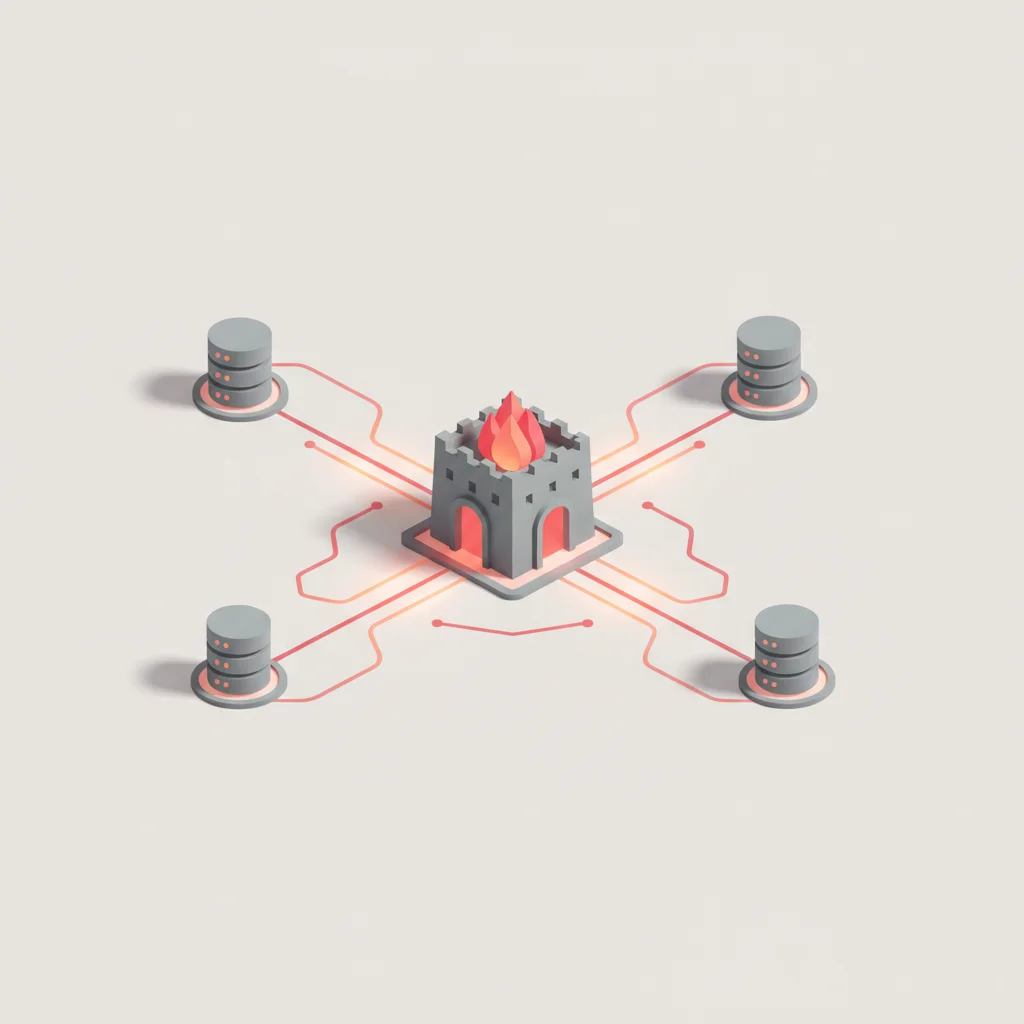
An automated brute force campaign follows a structured execution path. The process begins with targeted discovery, where attackers scan the public-facing IT infrastructure of an organization to identify open authentication ports, legacy web portals, API gateways, or remote desktop protocols (RDP). These endpoints represent entry points into corporate environments and are frequently left exposed due to misconfigured firewalls or lack of central asset management.
Once an open target is established, the adversary deploys specialized brute force tools to manage the execution of the attack. Command-line frameworks such as Hydra, Medusa, and Ncrack are designed to test thousands of credentials across multiple protocols (such as SSH, FTP, HTTP, and SMTP) simultaneously. For offline hash-cracking, platforms like John the Ripper and Hashcat harness the parallel processing power of graphics cards to break exfiltrated password hashes. These software suites allow attackers to feed in customized dictionaries, configure syntax rules (such as replacing "e" with "3"), and set thread counts to maximize throughput.
To scale their campaigns and bypass traditional security systems, cybercriminals employ automated scripts and distributed botnets. A botnet is a network of compromised computers, servers, or IoT devices spread across the globe, controlled by a centralized command-and-control server. Instead of sending thousands of authentication requests from a single IP address—which would instantly trigger firewall bans—the attacker routes requests through the botnet. This distributes the traffic across thousands of unique IP addresses, creating a slow and low-volume attack footprint that mimics legitimate, decentralized user activity.
From a systems perspective, the attack flow progresses through the following distinct stages:
Common Types of Brute Force Attacks
The methodologies used by modern cybercriminals have evolved far beyond basic, sequential character guessing. Today, brute force campaigns leverage contextual data, behavioral psychology, and massive leaked datasets to bypass generic authentication walls. Categorizing these attacks is essential for designing specific, multi-layered defensive strategies.
Simple Brute Force Attacks
A simple brute force attack is the purest form of trial-and-error guessing. It does not rely on external databases or dictionary files. Instead, the automated script systematically generates every possible combination of alphanumeric characters and symbols until it successfully gains entry.
This method is computationally expensive and highly inefficient for complex, long passwords. However, it remains a dangerous threat to unhardened environments, IoT devices with factory-default passwords, and older legacy hardware. In these environments, attackers can quickly brute-force standard default configurations (such as "admin" or "123456") to establish an initial foothold within a corporate intranet.
Dictionary Attacks
A dictionary attack replaces random character generation with targeted, structured wordlists. Cybercriminals compile lists containing millions of words, names, phrases, common spelling variations, and historically leaked passwords. The automated script then processes these words sequentially against the target authentication portal.
Because most users choose passwords based on real-world vocabulary, dictionary attacks are far more effective than simple brute-forcing. Security professionals must counter this by cross-referencing user password selections against known dictionary files and prohibiting the reuse of standard dictionary terms.
Credential Stuffing
Credential stuffing is an advanced, automated threat vector that exploits a common human vulnerability: password reuse. When a major online platform suffers a data breach, cybercriminals packages the leaked email addresses, usernames, and passwords into massive databases known as combo lists.
Using automated software like Sentry MBA or OpenBullet, attackers attempt to "stuff" these credentials into the login portals of unrelated high-value targets, such as banking platforms, e-commerce applications, and corporate VPN portals. Since many users reuse the same password across multiple personal and professional accounts, credential stuffing yields highly reliable access without needing to guess or crack custom passwords.
Password Spraying
Traditional brute force methods target a single account with thousands of password guesses, which quickly triggers lockouts. Password spraying subverts this defense by reversing the dynamic. In a password spraying campaign, the attacker tests a single, highly common password (such as "Company2026!" or "Welcome123!") across thousands of unique usernames within an organization.
By keeping the number of failed attempts per user extremely low (e.g., one or two attempts per day), the attacker bypasses threshold-based lockout policies. This makes password spraying highly dangerous to enterprise environments running active directory systems, as it allows attackers to slowly probe the network undetected.
Reverse Brute Force Attacks
In a reverse brute force scenario, the attacker begins with a known, highly common password and attempts to discover a valid username that matches it. This tactic relies on corporate directory structures, public employee lists on social media, or predictable email structures to compile a list of potential usernames.
By systematically trying a common password against thousands of valid usernames, the attacker avoids locking out any single account. The system registers individual, isolated login failures across many accounts, which might not trigger standard rate-limiting alarms unless advanced correlation logic is in place.
Hybrid Brute Force Attacks
A hybrid brute force attack merges dictionary attacks with simple brute-forcing. The automated script takes a base word from a dictionary and applies custom programmatic rules to alter its structure. These rules include prepending or appending numbers, substituting letters with special symbols, and applying random uppercase formatting.
This attack simulates the standard modifications users make to satisfy corporate password complexity requirements. Consequently, a hybrid attack can easily compromise structured passwords that adhere to basic complexity rules but lack sufficient random length.
Why Do Cybercriminals Launch Brute Force Attacks?
The primary driver behind automated authentication attacks is financial gain. Cybercriminals operate structured, business-like entities that seek to maximize return on investment (ROI). Brute force attacks require relatively low technical skill and minor financial investment compared to purchasing zero-day exploits or developing custom malware. An attacker can lease cloud servers and botnets for a fraction of the potential payout from a single compromised enterprise account.
Once an attacker compromises an active user account, they gain unauthorized access to internal resources. This access is frequently monetized through multiple pathways:
Data Breach and Intellectual Property Theft: Attackers exfiltrate sensitive customer databases, financial records, proprietary software code, or strategic business plans. This data can be held for ransom or sold on dark web marketplaces.
System Exploitation and Lateral Movement: Once inside an active directory or intranet environment, attackers deploy ransomware or cryptomining software. This allows them to take control of critical servers and disrupt operations, demanding massive ransoms for system restoration.
Account Takeover (ATO) and Fraud: Access to e-commerce or financial accounts allows attackers to conduct fraudulent transactions, drain loyalty points, or divert corporate payments into private accounts.
Additionally, successful attacks can trigger severe regulatory and legal consequences for the victimized enterprise. Under frameworks like the General Data Protection Regulation (GDPR) and Turkey's Personal Data Protection Law (KVKK), organizations are legally required to deploy adequate technical and organizational measures to secure user data.
A successful brute force breach resulting from weak password controls, lack of rate limiting, or absent multi-factor authentication represents a clear failure in compliance. This can expose the business to severe administrative fines (up to 4% of global annual turnover under GDPR), class-action lawsuits from affected clients, and catastrophic damage to brand reputation.
Key Indicators: How to Detect a Brute Force Attack in Progress

Early detection of an active brute force campaign is the difference between an isolated security incident and a catastrophic data breach. Because brute force tools generate large volumes of network requests, they leave clear operational footprints across server logs and application monitoring systems. Security teams must configure active alerts to flag these anomalies in real-time.
A primary indicator of a brute force campaign is a sudden, exponential spike in failed authentication attempts. While occasional login failures are normal, a sudden surge in failed attempts on a single port or login URL indicates automated probing.
Security Information and Event Management (SIEM) systems should monitor for these events. In Windows Server environments, Event ID 4625 (An account failed to log on) should be tracked for anomalous frequency. On Linux hosts, continuous monitoring of @@CODE0@@ or @@CODE1@@ is required to spot rapid authentication failures across SSH ports.
Another critical indicator is a misalignment between user logins and standard geographic or temporal profiles. If an employee standardly accesses corporate systems from a domestic IP address during business hours, a series of failed logins from foreign hosting provider IP addresses at midnight should trigger an immediate security alert. Similarly, detecting multiple failed logins for the same user account from different geographic regions within minutes (impossible travel times) confirms an active, distributed password guessing attempt.
Furthermore, automated brute force scripts often present distinctive technical signatures in HTTP header metadata. Attackers using standard brute force software often fail to configure realistic User-Agent strings. This results in missing, outdated, or highly uniform User-Agent headers across millions of requests.
A high volume of HTTP POST requests targeting authentication endpoints from diverse IP addresses—all sharing the exact same User-Agent string—is a strong indicator of a distributed credential stuffing campaign. Additionally, sudden, unexplained spikes in server bandwidth, memory usage, or database query response times on authentication portals often occur because the system is struggling to compute cryptographic hashes for millions of automated login requests.
To differentiate between standard user errors and an active intrusion attempt, security teams can monitor the following indicators:
Comprehensive Strategies: How to Prevent Brute Force Attacks
Defending your digital perimeter against automated brute force threats requires a multi-layered security architecture. Relying on a single security control creates a single point of failure. By applying the principle of defense-in-depth, you ensure that even if an attacker bypasses one barrier, subsequent protective layers will prevent unauthorized access.
Enforce Stringent Password Policies
The foundation of password security has shifted away from complex, short phrases toward long, high-entropy passphrases. According to the NIST Special Publication 800-63B (Digital Identity Guidelines), password length is the most critical factor in resisting automated offline decryption. Modern password policies should require a minimum length of 12 to 16 characters, encouraging users to combine random words into unique passphrases.
Furthermore, enterprises must move away from arbitrary character rotations (e.g., forcing password changes every 90 days), as this often leads users to adopt predictable patterns (such as "Spring2026!"). Instead, implement real-time credential validation during the account creation process. This process should cross-reference user selections against known dictionaries, historic data leaks, and weak combinations.
Implement Multi-Factor Authentication (MFA)
Multi-factor authentication (MFA) is the single most effective technical control for stopping brute force attacks. By requiring two or more independent factors—something you know (password), something you have (hardware token or authenticator app), and something you are (biometrics)—MFA renders guessed passwords useless to an attacker.
However, not all MFA implementations provide equal protection. SMS-based and email-based one-time passwords (OTPs) are vulnerable to intercept attacks, SIM-swapping, and social engineering. Enterprises should implement robust authentication protocols, such as FIDO2/WebAuthn standards, hardware security keys (e.g., YubiKeys), or push-notification-based authenticators that utilize cryptographic challenge-response mechanisms.
       [Attacker]
           │
           │ (Guesses Password via Brute Force)
           ▼
   ┌───────────────┐
   │ Password verified?  ──► YES
   └───────────────┘
           │
           ▼
   ┌───────────────┐
   │ MFA Challenge?  ──► Required (FIDO2 / Hardware Token)
   └───────────────┘
           │
           ├─► Correct physical/dynamic token provided? ──► YES ──► [Access Granted]
           │
           └─► Failed / Not provided ────────────────────► NO  ──► [Access Blocked]
Establish Account Lockout Mechanisms
An account lockout policy prevents persistent online guessing by disabling an account after a specified number of failed login attempts. For example, a system can be configured to lock an account for 30 minutes after five consecutive failed attempts. This severely limits the throughput of an online attacker, making a brute force campaign mathematically unviable.
While lockout policies are highly effective, they introduce the risk of Denial of Service (DoS) attacks. An attacker can deliberately fail logins for target usernames, locking legitimate employees out of their active accounts.
To mitigate this, implement progressive delays (exponential backoff) instead of permanent lockouts. Under this model, the delay between permitted attempts doubles with each consecutive failure (e.g., 2 seconds, 4 seconds, 8 seconds, 16 seconds), slowing down automated scripts without completely locking out valid users.
Utilize Rate Limiting and CAPTCHA
Rate limiting restricts the number of requests a user or IP address can make to an authentication endpoint within a specific timeframe. In high-traffic environments, rate limiting can be configured on the webserver layer (such as Nginx using limit_req_zone) or via API gateways. This prevents automated scripts from flooding server resources with millions of concurrent authentication requests.
To support this, CAPTCHA (Completely Automated Public Turing test to tell Computers and Humans Apart) integration should be deployed on login forms. Modern solutions like Google reCAPTCHA v3 or Cloudflare Turnstile analyze visitor telemetry and behavior in the background, assigning a risk score without interrupting the user experience. If anomalous behavior is detected, the system presents a puzzle to confirm the user is human, stopping automated headless browsers and scraping tools.
Hide or Restrict Administrative Login URLs
Default administration URLs, such as @@CODE0@@, @@CODE1@@, or public SSH ports on Port 22, are the first targets scanned by brute force bots. Modifying these default routes to customized paths makes it harder for automated scanners to locate your login portals.
For enterprise infrastructures, critical administrative login forms and database access points should never be exposed directly to the public internet. Instead, place these portals behind a secure Virtual Private Network (VPN), a Zero Trust Network Access (ZTNA) gateway, or limit access to specific corporate IP ranges. By requiring users to authenticate through a secure tunnel before reaching the login interface, you reduce your public-facing attack surface.
Block Malicious IP Addresses Continuously
A Web Application Firewall (WAF) acts as a gateway that monitors, filters, and blocks HTTP traffic to and from a web application. Implementing a WAF allows you to enforce advanced IP-reputation blocking, instantly rejecting traffic from known malicious IP addresses, public proxies, Tor exit nodes, and compromised hosting networks frequently used by botnets.
Additionally, host-based intrusion prevention systems like Fail2ban can be installed directly on virtual machines. Fail2ban monitors server log files for signs of brute force behavior, such as repetitive SSH authentication failures. When a suspicious pattern is matched, the software automatically updates firewall rules (e.g., iptables) to reject all incoming traffic from the offending IP address for a specified period, neutralizing the threat at the local network level.
Monitor Server Logs and Network Traffic Activity
Comprehensive security requires visibility across your entire IT landscape. Implementing centralized log management via a SIEM platform allows security teams to correlate events from webservers, firewalls, and active directories in real-time. Automated detection rules can be configured to trigger alarms when login anomalies are detected, such as multiple failed authentication events across different corporate accounts within a short time.
By continuously analyzing log data, security teams can identify emerging patterns, such as a slow-moving password spraying campaign that might bypass standard IP lockout rules. Real-time log monitoring provides the necessary intelligence to adapt defensive rules dynamically, block attackers before they gain a foothold, and maintain compliance with industry standards.
Conclusion: Securing Your Enterprise Against Automated Threats
Mitigating the risk of brute force campaigns requires an ongoing commitment to modern authentication practices, proactive threat monitoring, and robust security policies. As automated scripts, computing power, and credential stuffing datasets become more sophisticated, static password controls are no longer sufficient to protect sensitive enterprise resources.
By implementing a defense-in-depth model—combining long, high-entropy passphrases, multi-factor authentication (MFA), exponential rate limiting, and continuous log analysis—organizations can build resilient digital perimeters. Securing your authentication gateways is not just a technical requirement; it is a critical business strategy that protects your financial health, maintains regulatory compliance, and preserves client trust.
Frequently Asked Questions
What is a real-world example of a brute force attack?
In a real-world scenario, attackers targeted the GitHub platform in 2013 by using brute force methods to check millions of weak password combinations against user accounts. This resulted in unauthorized access to several developer repositories and prompted GitHub to enforce stronger password policies and multi-factor authentication (MFA) globally.
How long does it take for a brute force attack to crack a password?
The time required depends on password complexity, length, and the cryptographic hashing algorithm used. A basic 8-character password consisting only of lowercase letters can be cracked in minutes, while a complex 16-character alphanumeric password would take billions of years to decrypt using modern hardware.
Are brute force attacks still effective today?
Yes, brute force attacks remain highly effective due to widespread password reuse across multiple platforms and the relative affordability of advanced GPU hashing hardware. Automated botnets continuously scan the internet for unsecured administrative interfaces, making proper security configurations a constant necessity.
What is the difference between online and offline brute force attacks?
Online attacks test passwords directly against an active login portal, which slows down execution due to network latency and makes detection easy. Offline attacks occur when cybercriminals steal a hashed password database and decrypt the hashes locally using high-performance servers, avoiding detection entirely.
How does multi-factor authentication stop brute force cracking?
Multi-factor authentication adds an extra verification layer, such as a biometric check, a security token, or a dynamic code. Even if an attacker successfully guesses or cracks a password, they cannot access the account without this secondary physical or dynamic verification factor.
Can an account lockout policy cause a denial-of-service attack?
Yes, strict lockout policies can be exploited by malicious actors to systematically lock legitimate users out of their accounts by intentionally inputting incorrect passwords. Implementing progressive delays or exponential backoff rather than immediate permanent account locking helps mitigate this risk.
What are some popular automated brute force tools used by penetration testers?
Security professionals and attackers use software tools like Hydra, John the Ripper, Medusa, Hashcat, and Ncrack. These tools allow high-speed execution of dictionary lists, rule-based guessing, and distributed credential validation across multiple network protocols.
What compliance penalties can result from brute force breaches?
Organizations that fail to implement sufficient access controls and suffer a breach can face severe financial and legal penalties under regulations like GDPR and KVKK. Fines can reach up to 4% of global annual turnover or millions of Euros for neglecting to protect sensitive user credentials.