
What Is Social Engineering in Cybersecurity?
Social engineering exploits human psychology to deceive individuals into revealing sensitive data. It bypasses technical controls to compromise secure networks and systems.

ON THIS PAGE
0% read
- Understanding Social Engineering in the Corporate Landscape
- The Psychology of a Cyberattack: Why Technical Controls Fail
- The 4 Phases of the Social Engineering Attack Lifecycle
- Common Types of Social Engineering Attacks
- Recognizing the Red Flags: How to Spot an Attack
- Strategic Prevention: Building a Human Firewall
Social engineering in cybersecurity is the deliberate exploitation of human psychology to manipulate individuals into performing actions or revealing confidential information that compromises an organization's secure perimeter. Unlike traditional cyberattacks that target architectural flaws, outdated software, or unpatched network ports, social engineering bypasses robust technical controls by targeting the human element—often referred to as the weakest link in the security chain. For business owners, executives, and technical decision-makers, understanding these deceptive practices is critical to protecting intellectual property, corporate funds, and proprietary customer data. This guide provides a comprehensive, highly technical analysis of how threat actors execute these psychological exploits, the multi-phase frameworks they use, and how enterprises can construct an active defense strategy to mitigate risk across their entire operations.
Understanding Social Engineering in the Corporate Landscape

In the modern cyber threat landscape, enterprises spend millions of dollars deploying firewalls, intrusion detection systems, end-point detection and response (EDR) agents, and robust encryption protocols. Despite these deep technical defenses, a single employee clicking a malicious link, disclosing an administrative password over the phone, or plugging in an unknown USB drive can render high-end defensive configurations useless. Social engineering exploits human psychology to bypass these sophisticated layers of security. Rather than scanning thousands of IP addresses for an open port, threat actors find it far easier to compromise a single set of legitimate credentials by tricking a human administrator.
This human-centric vulnerability stems from cognitive biases built into human behavior. People are naturally inclined to trust established communication channels, respect authority figures, and respond rapidly to urgent requests. Threat actors exploit these evolutionary traits, turning normal professional cooperation into a vulnerability. When an employee experiences high levels of stress, fatigue, or urgency, their cognitive processing shifts from analytical reasoning to intuitive decision-making. Security protocols are frequently bypassed during these moments of cognitive overload, leading to critical human error and subsequent data breaches.
The business impact of a successful social engineering campaign goes far beyond the immediate network compromise. It triggers a cascade of financial, operational, regulatory, and reputational damages. Organizations face direct financial theft through Business Email Compromise (BEC) schemes, expensive ransomware payouts, and extensive forensic investigation costs. Furthermore, under modern data privacy frameworks such as the General Data Protection Regulation (GDPR) and the California Consumer Privacy Act (CCPA), a data breach caused by human error can result in massive regulatory fines if the organization failed to implement adequate administrative controls. The long-term loss of customer trust and brand equity often proves even more costly than the immediate regulatory penalties.
The Psychology of a Cyberattack: Why Technical Controls Fail

To understand why technical controls fail against social engineering, one must analyze the psychological mechanics employed by modern threat actors. Social engineers do not rely on random chance; they use precise behavioral manipulation techniques developed over decades of psychological research. By targeting specific human emotions and cognitive shortcuts, attackers create situations where the victim feels compelled to bypass established security protocols.
These attacks succeed because they exploit the brain's "System 1" thinking—an automatic, fast, and subconscious mode of processing information. When a target is forced into System 1 processing through artificial crises or authoritative pressure, they stop evaluating the technical legitimacy of the request. They focus entirely on resolving the immediate emotional or situational pressure, ignoring security warnings that would otherwise be obvious under calm, analytical "System 2" thinking.
The Role of Urgency and Fear
Urgency and fear are the most common psychological triggers used in phishing campaigns and corporate scams. By creating a high-pressure situation, attackers systematically disable the victim's logical reasoning. An email claiming that an executive's payroll account will be suspended within two hours, or a notification stating that a corporate database has been compromised, forces the target into a state of panic. Under the influence of adrenaline and anxiety, the victim prioritizes immediate action over safety protocols.
This manufactured urgency often prevents employees from performing standard out-of-band verifications. For example, a finance manager might receive a high-priority request from what appears to be the CEO, demanding an emergency wire transfer to secure an acquisition. The email warns that any delay will terminate the deal and lead to severe professional consequences. Driven by the fear of failure and the pressure of a tight deadline, the manager completes the transaction without verifying the request through an approved secondary channel, resulting in a severe financial loss.
Authority and Trust Exploitation
Organizations are built on hierarchies, and employees are conditioned to respect authority and follow instructions from executive leadership. Threat actors exploit this deep-seated professional habit by impersonating C-level executives, legal counsel, external regulators, or law enforcement officials. When an employee receives a directive from a high-ranking authority figure, they are far less likely to question the legitimacy of the request or enforce standard verification processes.
To build trust, attackers spend weeks researching their targets to craft highly detailed backstories, known as pretexting. They learn the organization’s internal terminology, current projects, and vendor relationships. By presenting themselves as a trusted insider or an authorized external auditor, the attacker bypasses the natural skepticism of the target. This psychological manipulation is especially effective in large, siloed organizations where employees do not personally know every executive or external partner, making it easy for an administrative assistant to trust a spoofed email or phone call from a "VP of Global Infrastructure."
Curiosity and Greed
Curiosity and greed are powerful motivators that threat actors exploit to bypass corporate network perimeters. Attackers design lures that promise exclusive benefits, financial gains, or interesting confidential information. In the workplace, this may manifest as a document titled "Q4 Layoff Plan and Compensation Adjustments" sent to a general mailing list, or a physical USB drive left in a common area labeled "Executive Salaries."
When an employee interacts with these lures, they are driven by the desire to uncover hidden information or secure a personal advantage. This emotional drive overrides their security training. Once the malicious attachment is opened or the USB drive is plugged into a corporate workstation, malicious payloads are executed silently in the background. The attacker gains an initial foothold within the network, bypassing perimeter firewalls and endpoint security tools that cannot stop actions initiated by a legitimate, authenticated user.
The 4 Phases of the Social Engineering Attack Lifecycle

Social engineering attacks are structured campaigns that follow a predictable, highly organized lifecycle. Professional threat actors rarely launch an attack without extensive preparation. They operate like business analysts, gathering intelligence, testing theories, and systematically executing their plans to maximize their chances of success while minimizing detection. Understanding this lifecycle allows security teams to design defenses that disrupt the attack at multiple stages.
By analyzing the lifecycle of an attack, organizations can identify which defensive controls are failing. For example, if attackers consistently succeed in the reconnaissance phase, it indicates that the company is exposing too much sensitive technical data online. If they succeed in the execution phase, it highlights a lack of multi-factor authentication or poor process controls around financial transactions.
1. Preparation and Reconnaissance (Information Gathering)
The lifecycle begins with reconnaissance, where the attacker gathers as much information as possible about the target organization and its employees. Threat actors use Open-Source Intelligence (OSINT) techniques, searching public sources such as LinkedIn, corporate websites, press releases, and social media platforms. They map the organization’s hierarchy, identify key personnel in high-value departments (like Finance, HR, and IT), and analyze the technologies used by the company by examining job postings for specific software skills.
Attackers also use technical tools to gather intelligence. They scan public DNS records, identify email formatting conventions, and look for exposed staging environments or legacy portals. This data allows the attacker to build a highly accurate profile of the target. They identify specific vulnerabilities in the human and technical infrastructure, selecting the prime targets for exploitation—such as a newly hired accountant who may not be fully trained on the company's financial verification policies.
2. Hooking and Deceiving (Establishing Trust)
Once the intelligence is gathered, the attacker enters the hooking phase. Here, they make initial contact with the selected target and begin building a relationship or establishing a believable pretext. The goal is to build trust and lower the victim's natural defenses. The attacker may send a series of benign emails, engage with the target on professional social networks, or call them pretending to be a service desk technician resolving an active IT ticket.
During this stage, the attacker carefully deploys their pretext—a fabricated story that explains why they are contacting the victim and why they need specific information. The pretext is designed to fit naturally into the victim's daily work routine. For instance, the attacker might claim to be an external software vendor conducting a routine system audit, using the real names of the company's executive sponsors gathered during the reconnaissance phase to establish instant credibility.
3. Execution (The Manipulation)
The execution phase is the climax of the attack, where the psychological manipulation occurs. Once the attacker has established trust or successfully pressured the victim, they prompt them to perform the desired action. This action might involve clicking a link to a credential harvesting page, downloading a malicious file disguised as an invoice, revealing sensitive server configurations, or initiating a wire transfer to a fraudulent account.
During this phase, the attacker closely monitors the victim's reactions and adjusts their tactics in real time. If the victim hesitates or asks questions, the attacker may escalate the pressure by invoking authority, emphasizing a looming deadline, or offering immediate assistance to guide them through the process. The execution is typically swift, aiming to complete the malicious action before the victim has time to consult a colleague or report the interaction to the security team.
4. Exit and Erasing Tracks
The final phase of the lifecycle is the exit. Once the attacker has achieved their objective—whether acquiring administrative credentials, stealing proprietary data, or diverting funds—they work to preserve their access and erase their tracks. They aim to leave the organization completely unaware that a security incident has occurred, allowing them to exploit the compromised access for as long as possible.
To do this, attackers delete temporary files, clear system event logs, disable alerts, and close the communication channels used during the attack, such as burner phone numbers or temporary email domains. They may also install silent, persistent backdoors within the network to ensure long-term access even if the victim later changes their password. A successful exit leaves the organization vulnerable to ongoing data exfiltration or future attacks, often for months before the initial intrusion is detected.
Common Types of Social Engineering Attacks
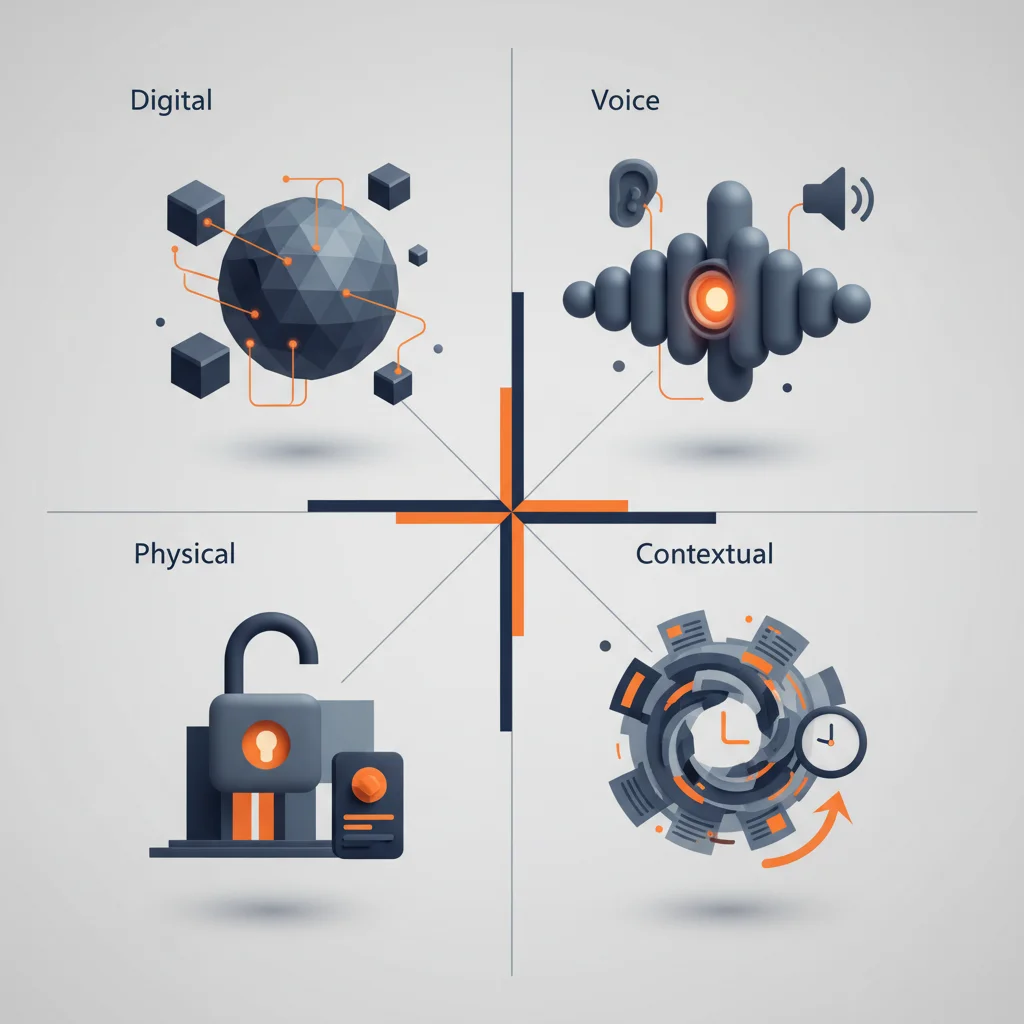
Social engineering manifests in many forms, ranging from broad automated email campaigns to highly targeted physical intrusions. As defense technologies advance, threat actors continuously adapt their delivery mechanisms, utilizing email, voice calls, SMS, social media, and physical impersonation to find entry points into secure corporate networks.
Security leaders must recognize that these attack vectors are often combined in hybrid campaigns. For example, an attacker might start with an SMS text (smishing) to alert the user about an urgent security issue, followed immediately by a phone call (vishing) pretending to be the security team, and finally directing the user to a spoofed login page (phishing) to capture their credentials.
Phishing, Spear-Phishing, and Whaling
Phishing is the most widespread form of social engineering, consisting of mass-distribution emails designed to look like legitimate communications from trusted institutions, such as banks, software providers, or utility companies. These broad campaigns rely on sheer volume, hoping that a small percentage of recipients will click on the malicious links or download attachments containing malware.
Spear-phishing is a highly targeted version of this attack. Instead of sending generic emails to thousands of recipients, the attacker customizes the communication for a specific individual or department within a single company. They use personal details, current project names, and internal corporate terminology to make the email highly convincing. Whaling takes this personalization even further by targeting high-profile executives such as CEOs, CFOs, or Board members. Whaling emails often impersonate legal authorities, regulatory bodies, or major business partners, discussing sensitive topics like pending lawsuits, mergers, or high-value audits.
Pretexting (Fabricated Scenarios)
Pretexting involves creating a detailed, fabricated scenario (the pretext) that the attacker uses to establish a plausible story and trick the victim. Rather than relying on simple urgency, pretexting relies on building a complex web of lies that makes the attacker’s request seem completely logical. The attacker often plays a role that has a legitimate right to access the requested information.
A classic corporate pretexting scenario involves an attacker pretending to be from an external HR audit firm. They contact employees asking them to verify their personal details, social security numbers, or banking information as part of a routine compliance review. Because the scenario is highly structured and professional, employees comply without verifying the auditor's identity with their internal HR department, leading to massive sensitive data disclosure.
Baiting and Quid Pro Quo
Baiting attacks exploit human curiosity or greed by promising a reward in exchange for an action. This can occur physically, such as an attacker leaving a malware-infected USB flash drive in a company parking lot with a label like "Executive Payroll Details." When a curious employee plugs the drive into their corporate laptop to see what is on it, the drive automatically executes malicious code, giving the attacker remote access to the corporate network.
Quid pro quo (meaning "something for something") is similar to baiting but involves an exchange of services rather than a physical item. The most common scenario involves attackers impersonating IT technical support specialists. They make random calls to employees, offering to resolve a slow internet connection or a software bug. Once they find an employee experiencing technical issues, they "help" them by instructing them to disable security software, install a remote access tool, or share their login credentials.
Vishing and Smishing (Voice and SMS Threats)
Vishing, or voice phishing, utilizes telephone calls to execute social engineering schemes. Threat actors use VoIP technology to spoof caller ID numbers, making the call appear to come from a local bank, a government agency, or the company’s internal service desk. With the advancement of artificial intelligence, vishing has evolved to include AI voice cloning, where attackers can duplicate the voice of a company executive using just a few seconds of public audio from a webinar or interview. This cloned voice is then used to authorize urgent financial transactions over the phone.
Smishing, or SMS phishing, uses mobile text messaging as the primary attack vector. These messages often contain urgent warnings about locked bank accounts, missed package deliveries, or required multi-factor authentication resets. They include a link to a mobile-optimized phishing page designed to harvest login credentials or install mobile spyware on the device. Since users are often less suspicious of text messages than emails, smishing has become a highly successful entry point for enterprise attacks.
Tailgating and Physical Social Engineering
Physical social engineering targets the physical facilities of an enterprise. Tailgating, also known as piggybacking, occurs when an unauthorized person closely follows an authorized employee through a secured entry door, bypass-badging point, or security gate. The attacker often carries large boxes, holds a coffee cup, or pretends to be on an urgent phone call, playing on the employee's natural politeness to have the door held open for them.
Once inside the physical facility, the attacker can execute several high-impact exploits. They can perform dumpster diving to find discarded papers containing API keys, customer lists, or network diagrams. They can search for unoccupied workstations to insert malicious hardware keyloggers, or slip into server rooms to connect unauthorized network taps directly to the corporate backbone. Physical social engineering bypasses all digital perimeters by placing the threat actor directly inside the secure physical space.
Recognizing the Red Flags: How to Spot an Attack
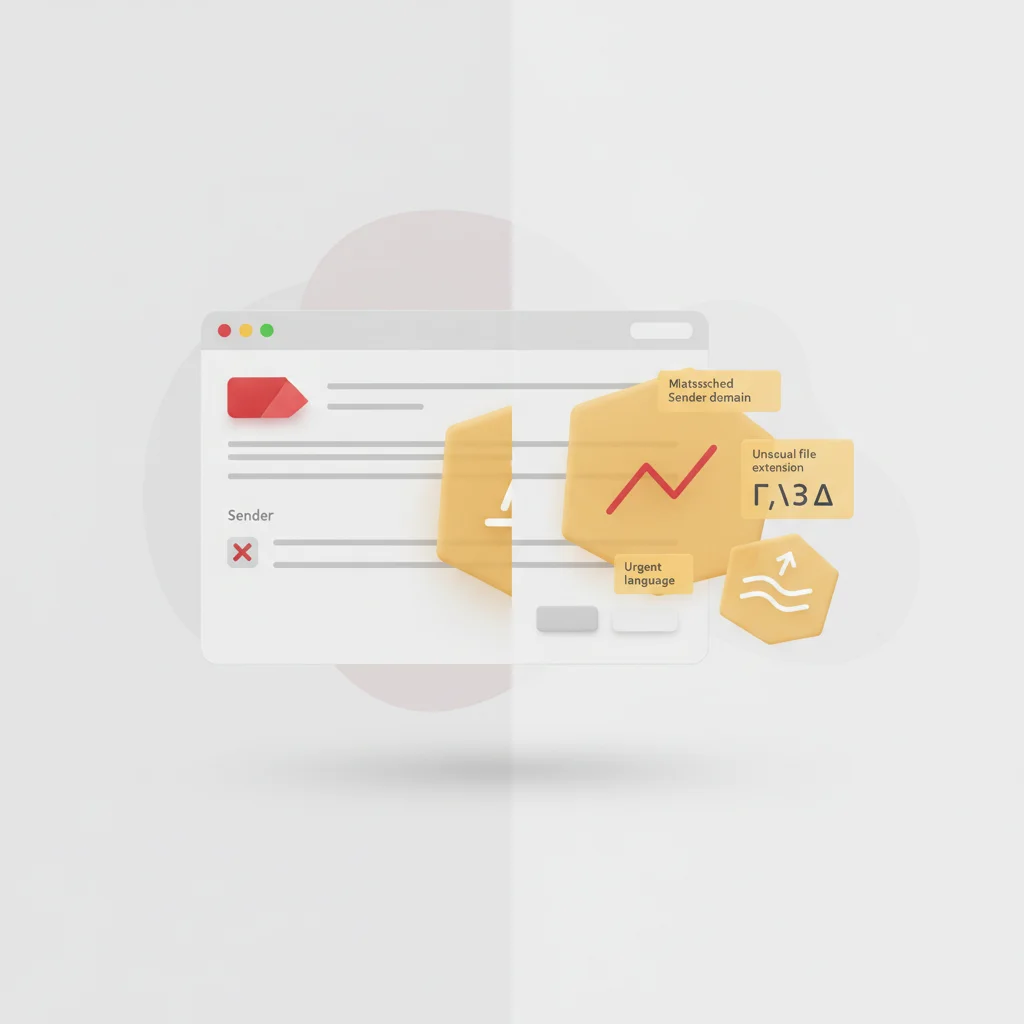
To defend against social engineering, employees must be trained to recognize the common indicators of an ongoing attack. Threat actors continually change their pretexts and technologies, but their underlying behavioral patterns and technical anomalies remain highly consistent. Recognizing these indicators is key to stopping an attack before any damage is done.
The first major red flag is any request that creates a sudden sense of urgency or bypasses established business processes. If an email, message, or phone call demands immediate action—such as resetting a password, transfering funds, or sharing confidential files—and warns of severe consequences if delayed, it must be treated as highly suspicious. Legitimate business processes always allow for verification, and no valid partner or executive should demand that security protocols be bypassed for speed.
Another critical indicator is technical inconsistency. Employees must learn to look closely at sender email addresses, domain names, and URLs. Attackers frequently use typo-squatting, creating domains that look almost identical to legitimate ones (e.g., @@CODE0@@ instead of @@CODE1@@ or @@CODE2@@ instead of @@CODE3@@). Additionally, communications that arrive via unexpected channels—such as an executive sending a highly sensitive request through a personal WhatsApp account rather than official corporate channels—must immediately raise alarms.
Finally, unusual or unsolicited requests for information are highly indicative of social engineering. Legitimate IT departments will never ask an employee for their password over the phone or demand that they disable their endpoint security agent to run an update. Any request to run macros on an attached spreadsheet, download unexpected executable files, or share internal network structures must be flagged, quarantined, and reported to the security operations center (SOC) immediately.
Strategic Prevention: Building a Human Firewall
Relying entirely on technical defenses is no longer sufficient to secure modern enterprises. Organizations must build a "Human Firewall"—a culture of security awareness where every employee acts as an active sensor and defender against psychological manipulation. This requires moving beyond yearly compliance videos to implement a continuous, strategic approach that combines technical controls with comprehensive administrative processes.
A robust human firewall aligns security protocols with daily business practices. It ensures that security is not viewed as a hindrance, but as an integral part of operations. When employees understand the mechanisms behind social engineering, they shift from being potential entry points to active defenders who quickly detect and report threats.
Implementing Security Awareness Training
Effective security awareness training must be continuous, engaging, and based on realistic threat scenarios. Annual slide presentations do not change employee behavior. Instead, organizations should deploy automated platforms that deliver short, interactive training modules throughout the year. These modules must cover the latest trends in the cyber threat landscape, including AI voice cloning, deepfakes, and advanced spear-phishing tactics.
Furthermore, training must be paired with regular, randomized social engineering simulations. By launching controlled phishing, vishing, and smishing campaigns, security teams can measure employee vulnerability in real time. Employees who fail a simulation should not face punitive actions; instead, they should receive immediate, constructive training to address their specific weak points. Tracking failure and reporting rates over time provides security leadership with clear data to evaluate the strength of their human firewall.
Enforcing Multi-Factor Authentication (MFA) and Zero Trust
Technical controls must support the human firewall by limiting the damage when human error occurs. The most effective technical control against credential harvesting is Phishing-Resistant Multi-Factor Authentication (MFA), such as FIDO2 security keys or WebAuthn protocols. Traditional MFA methods, such as SMS OTP codes or push notifications, are vulnerable to interception or prompt fatigue attacks, where an attacker spams the victim with push requests until they accidentally click "Approve."
In addition to robust MFA, organizations must adopt a Zero Trust Architecture. Under a Zero Trust model, the network operates on the assumption that every user, device, and connection is untrusted until verified. Implement strict network segmentation and access control policies based on the Principle of Least Privilege (PoLP). This ensures that even if an attacker compromises a standard employee's login credentials, their ability to move laterally through the network and access critical databases is tightly restricted.
Establishing Robust Access Control Policies
Technological solutions must be supported by clear administrative processes and strict access control policies. Organizations must design clear, mandatory procedures for high-risk operations, such as changing supplier banking details, issuing wire transfers, or altering payroll configurations. These procedures should require multi-person authorization (the "four-eyes" principle) and mandatory out-of-band verification.
For example, if a vendor requests a change to their bank routing details via email, the accounts payable department must call the vendor using a pre-established phone number from the master vendor directory—never the phone number listed in the email or on the new invoice. By embedding these verification loops directly into daily operations, the organization removes the opportunity for an attacker to exploit urgency or authority.
Regular Penetration Testing and Social Engineering Simulations
To validate both human and technical defenses, enterprises should conduct regular third-party penetration testing and Red Team simulations. These assessments simulate real-world attacks, targeting the organization’s physical, digital, and psychological perimeters. Ethical hackers attempt to infiltrate facilities, bypass badging systems, compromise helpdesks via vishing, and run targeted whaling campaigns against leadership.
The insights gained from these simulations are invaluable. They highlight unrecognized vulnerabilities in administrative processes, gaps in endpoint detection, and areas where employee training is falling short. Red Team reports provide executive leadership with a clear, realistic assessment of the company’s actual risk posture, allowing for targeted security investments and process improvements.
Frequently Asked Questions
What is the main goal of a social engineering attack?
The primary goal of a social engineering attack is to manipulate individuals into compromising security by revealing sensitive data, handing over login credentials, or transferring corporate funds. Attackers target human psychology to bypass digital security measures and gain unauthorized access to secure systems.
Why is social engineering considered the greatest threat to cybersecurity?
It is considered the greatest threat because it targets human vulnerability, which cannot be patched with software updates. While technical systems can be highly secured, a single manipulated employee can bypass those controls, making the human element the most unpredictable part of an organization's defense.
Can antivirus software stop a social engineering attack?
Antivirus software can detect and block malicious payloads or known phishing links, but it cannot prevent the initial psychological manipulation. If an attacker convinces an employee to share credentials over the phone or approve a fraudulent payment, traditional antivirus tools remain entirely blind to the exploit.
What is the difference between phishing and spear-phishing?
Phishing involves broad, generic email campaigns sent to thousands of random recipients to catch anyone who falls for the lure. Spear-phishing is a highly targeted attack customized for a specific individual, department, or company, using personalized details to appear authentic.
How does AI impact the threat of social engineering?
Artificial intelligence allows threat actors to scale highly personalized attacks and bypass traditional filters. Attackers use AI voice cloning to mimic executives during vishing calls and generate highly polished, grammatically correct phishing emails in multiple languages, making detection far more difficult.
What are the most common psychological triggers used in these attacks?
The most common psychological triggers are urgency, fear, authority, trust, curiosity, and greed. Attackers use these triggers to bypass analytical thinking, forcing the target to react quickly to avoid a crisis or secure a promised reward.
What is Business Email Compromise (BEC)?
Business Email Compromise is a high-impact social engineering attack where a threat actor gains access to a corporate email account or spoofs it to impersonate executives or vendors. They use this trusted identity to trick employees, clients, or partners into making unauthorized financial transfers or sharing proprietary data.
How can an organization measure the effectiveness of its security training?
Organizations can measure effectiveness by tracking key metrics over time, including simulated phishing click-through rates, reporting rates, and the time it takes for the SOC to receive the first report of an attack. A strong defense shows a steady decrease in simulation failures and a significant increase in employee reports.