
How to Sell Ebooks and Online Courses
Selling ebooks and online courses requires digital fulfillment systems, secure payment gateways, and compliant platforms to manage transactions and automated delivery effectively.

ON THIS PAGE
0% read
- The Infrastructure of Digital Product Commerce
- Selecting Compliant Platforms for Digital Fulfillment
- Integrating Secure Payment Gateways
- Automating Digital Delivery and Access Control
- Protecting Intellectual Property and Managing Risk
- Regulatory Compliance and Taxation for Digital Goods
- Corporate Strategies for Scaling Digital Sales
Selling ebooks and online courses requires digital fulfillment systems, secure payment gateways, and compliant platforms to manage transactions and automated delivery effectively.
Launching a scalable digital products division requires an architectural shift in how organizations manage content distribution, secure transaction pathways, and legal frameworks. Unlike physical goods, digital assets such as instructional books, whitepapers, and structured learning programs operate within high-speed distribution frameworks that require zero friction yet demand high levels of security. Organizations aiming to build a resilient, high-margin revenue stream through digital products must establish a robust pipeline that automates product delivery, protects intellectual property, and remains strictly compliant with international tax and data laws. This guide provides an exhaustive operational map for selecting digital architectures, safeguarding proprietary material, and automating cross-border transactions.
The Infrastructure of Digital Product Commerce
Transitioning from Physical to Digital Supply Chains
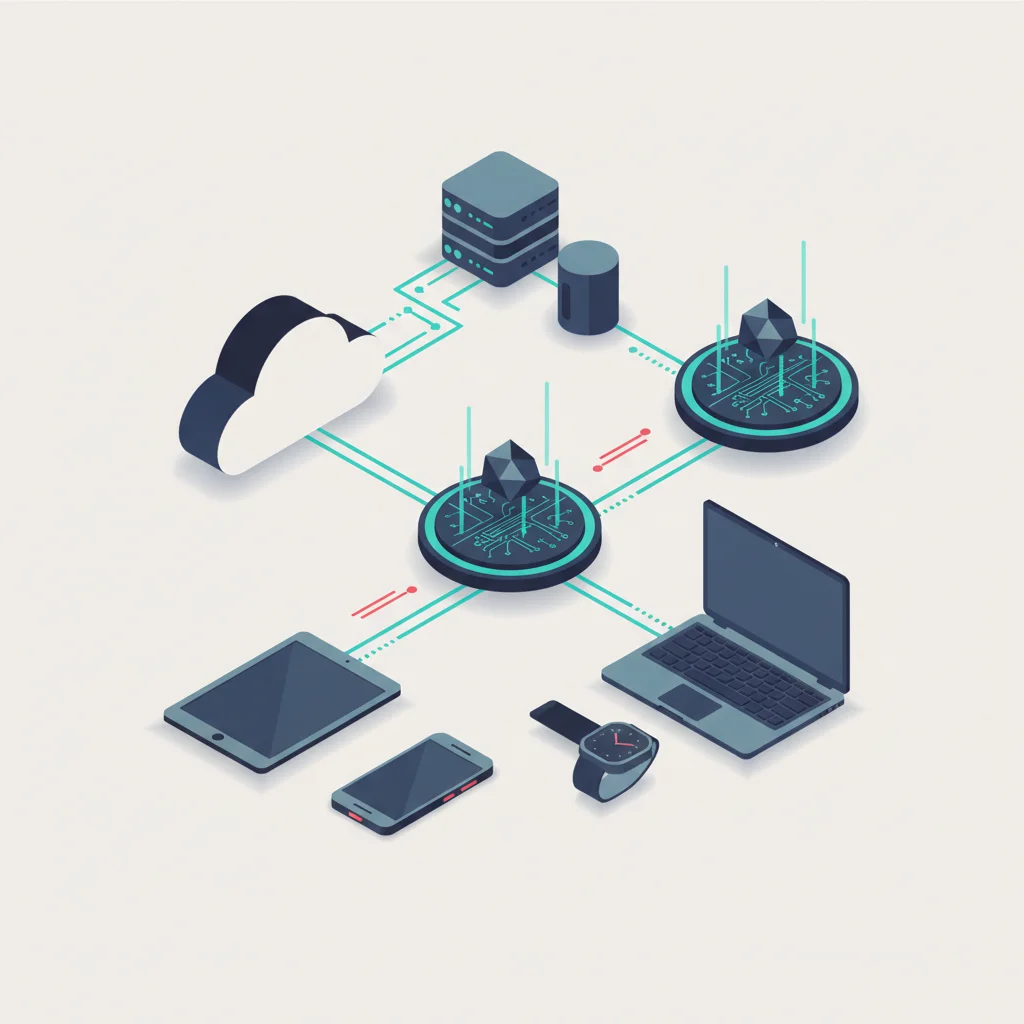
Establishing a digital supply chain requires replacing physical distribution networks with software-driven infrastructure. In a physical commerce system, inventory is constrained by physical warehouses, freight carriers, and regional distribution centers. In digital commerce, the supply chain consists of source file repositories, cloud database synchronization, content delivery networks (CDNs), and transactional mail APIs. Business operations must treat digital files with the same structured lifecycle management applied to physical goods, starting with robust version control and secure storage.
The primary asset pipeline begins with secure cloud storage, typically utilizing an object storage solution such as Amazon S3, Google Cloud Storage, or Azure Blob Storage. These cloud repositories act as the single source of truth for your digital assets. Rather than allowing public access to raw files, businesses configure secure bucket policies that restrict access exclusively to authorized system accounts and microservices. When a customer initiates a transaction, the underlying commerce engine communicates with the object store to locate the correct file version, ensuring that the buyer receives the precise SKU purchased.
To achieve fast download speeds and seamless course video playback across global territories, organizations rely on Content Delivery Networks (CDNs) like Cloudflare, Fastly, or Amazon CloudFront. CDNs distribute copies of your digital products to edge servers situated globally, drastically reducing latency. When a user in London or Dubai purchases an ebook, the file is delivered from an edge server in their vicinity rather than a centralized data store in North America. This architecture reduces server load, eliminates download failures, and provides a reliable user experience regardless of localized traffic spikes.
Core Requirements for Selling Ebooks and Courses Safely
Operating a digital product business demands a structured approach to cybersecurity, secure payment collection, and access control. Because digital files are easily replicated and distributed without authorization, safeguarding files at every point of the user journey is critical. This begins with implementing Transport Layer Security (TLS 1.3) protocols across all domains, transaction gateways, and learning environments to encrypt all data in transit. This prevents malicious actors from intercepting payload data, credit card details, or user login credentials.
Beyond transit security, organizations must establish a robust access management protocol. For digital book sales, this requires generating time-sensitive, single-use download links that expire within a designated timeframe (e.g., 24 to 48 hours) or after a specific number of download attempts. For educational courses, access requires a structured authentication layer using OAuth 2.0 or OpenID Connect protocols, enabling secure Single Sign-On (SSO) and preventing concurrent multi-device logins from a single account credential.
[Customer Payment]
       │
       ▼
[Payment Gateway Webhook] ──► [Generates Unique Crypto Token]
                                         │
                                         ▼
[User Initiates Download] ◄── [Delivers Secure, Time-Limited URL]
       │
       ▼
[Token Validated / File Streamed from CDN Edge]
To maintain technical safety and prevent financial losses from chargebacks, businesses must also utilize fraud prevention systems. Advanced payment firewalls analyze transactions in real time, assigning risk scores based on variables such as IP address mismatches, device fingerprints, and purchase velocity. By maintaining a clean checkout environment, your business preserves its merchant account standing and avoids costly penalty fees from global card schemes.
Selecting Compliant Platforms for Digital Fulfillment
Learning Management Systems (LMS) vs. Digital Storefronts
Choosing the correct software platform depends on the complexity of your digital inventory. If your catalog consists primarily of flat files like PDF manuals, EPUB books, or audio guides, a standard digital storefront is highly efficient. Platforms such as Shopify, WooCommerce, or Lemon Squeezy focus on optimizing checkout conversion rates, processing secure transactions, and delivering files immediately post-purchase. These storefronts utilize simple digital fulfillment apps to send download links directly to the customer's inbox.
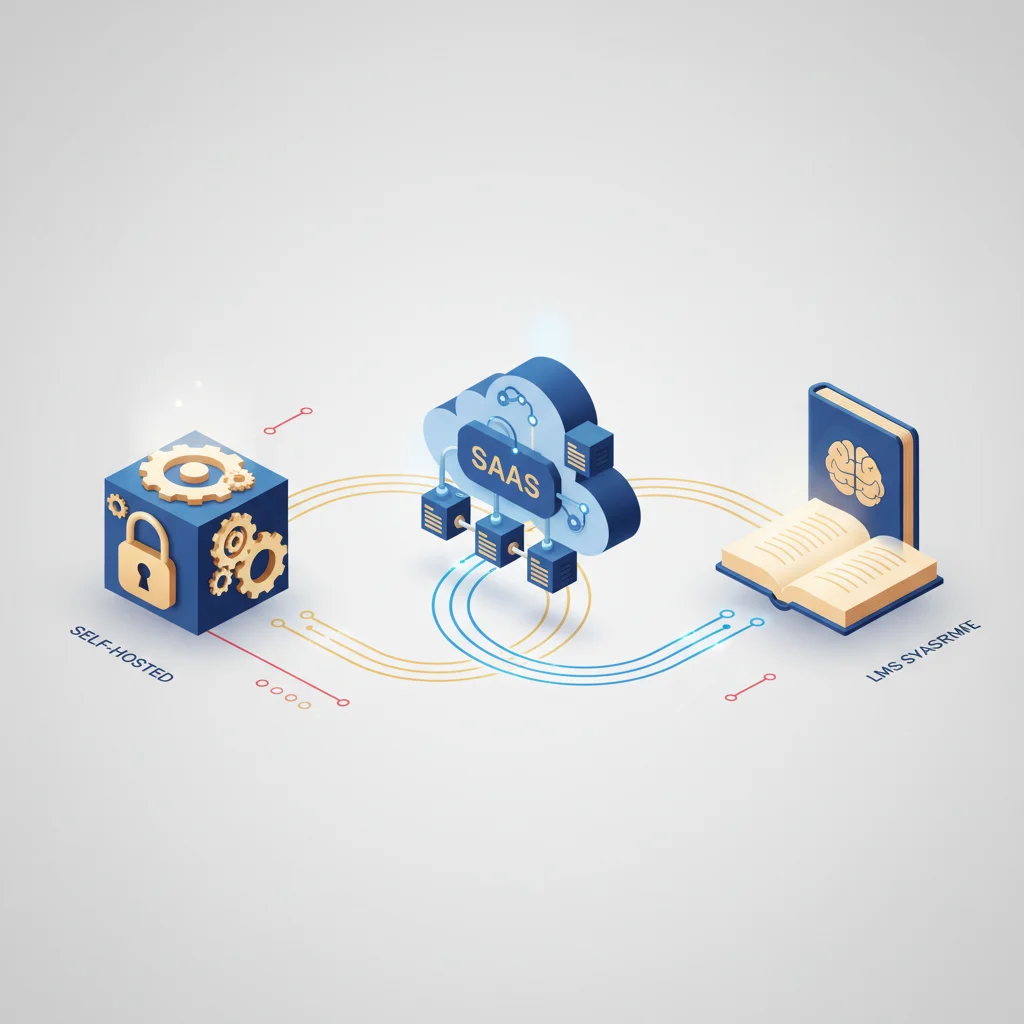
For interactive and multi-module educational courses, a Learning Management System (LMS) is required. An LMS manages student progression, hosts video lessons, facilitates graded quizzes, and manages student discussion boards. Dedicated LMS environments are divided into self-hosted plugins (such as LearnDash or LifterLMS running on WordPress) and cloud-based SaaS solutions (such as Kajabi, Teachable, or Thinkific). While storefronts excel at quick checkouts, an LMS excels at keeping learners engaged and managing access to premium material over time.
Selecting between these two models requires analyzing user behavior and administrative requirements. If your product is a hybrid offer—such as a guidebook paired with a multi-part video masterclass—integrating a transactional storefront with an LMS backend is often the most effective approach. This setup lets you utilize a conversion-optimized checkout to capture the initial sale, then programmatically provision a user account within the LMS using automated webhooks.
Evaluating Platform Security and Uptime Guarantees
When evaluating any digital product platform, operational uptime and data security are major performance indicators. A platform that experiences frequent service outages disrupts digital delivery, resulting in customer complaints, increased support ticket volumes, and lost sales. Examine the platform’s Service Level Agreement (SLA) before committing. Enterprise-grade platforms should offer a minimum of 99.9% uptime, backed by real-time status portals and redundant server failovers across multiple cloud zones.
Security certifications are equally important. Ensure the platform provider complies with the Payment Card Industry Data Security Standard (PCI-DSS) Level 1 to guarantee safe credit card processing. If your business serves customers in the European Union, the platform must also meet GDPR guidelines by offering data processing agreements (DPAs), built-in cookie consent modules, and straightforward procedures for user data deletion requests.
┌─────────────────────────────────────────────────────────────┐
│               Enterprise LMS Security Stack                 │
├──────────────────────────────┬──────────────────────────────┤
│ Identity & Access            │ Content Security             │
│ • MFA / SAML SSO             │ • Encrypted HLS Video        │
│ • JWT Session Verification   │ • Dynamic PDF Watermarking   │
│ • IP Concurrency Policing    │ • Signed Cookie CDN URL's    │
├──────────────────────────────┴──────────────────────────────┤
│ Infrastructure Compliance                                   │
│ • PCI-DSS Level 1 Gateway Enforced                          │
│ • SOC 2 Type II System Audited                              │
│ • GDPR-Ready Personal Identity Protection (PII)             │
└─────────────────────────────────────────────────────────────┘
Furthermore, evaluate how the platform stores and manages customer data. Platforms holding SOC 2 Type II certifications demonstrate that an independent auditor has verified their data protection controls over an extended period. This level of security is essential for B2B transactions, corporate training programs, and government-contracted digital education programs.
Self-Hosted Solutions vs. SaaS Ecosystems
A primary strategic choice for technology decision-makers is choosing between a self-hosted platform or a closed software-as-a-service (SaaS) ecosystem. This choice dictates your initial setup times, ongoing development costs, scaling capabilities, and data control level.
Self-hosted architectures offer unlimited design freedom and eliminate platform transaction fees, making them highly profitable for high-volume sellers. However, they demand a skilled developer or system administrator to handle database scaling, web application firewalls (WAFs), and continuous security patching. SaaS options trade customization and custom code options for operational simplicity, fast time-to-market, and zero server maintenance overheads.
Integrating Secure Payment Gateways

Managing Global Transactions and Currency Conversions
Selling digital products globally requires a checkout system configured to handle international currencies and regional payment preferences. While North American buyers prefer credit cards and digital wallets like Apple Pay or Google Pay, international buyers often rely on local payment systems. For instance, in Turkey, supporting the Troy card scheme is essential; in the United Kingdom, open banking services are popular; and in the United Arab Emirates, local credit networks and Apple Pay dominate mobile checkouts.
To capture maximum sales volume, integrate payment gateways that offer multi-currency display and settlement options. Dynamic Currency Conversion (DCC) allows visitors to view prices in their home currency while your business receives the settlement in its preferred functional currency (such as USD, EUR, or AED). This setup reduces shopping cart abandonment rates by removing currency conversion surprises at checkout.
Modern payment service providers (PSPs) like Stripe, Adyen, and checkout-focused networks like Paddle allow businesses to dynamically display payment methods based on the user's IP address. This ensures that a buyer in Europe sees iDEAL or Sofort, while a buyer in the United States is presented with standard credit card fields and express checkout buttons.
Fraud Prevention and Chargeback Mitigation
Digital products are prime targets for transaction fraud and friendly fraud (chargebacks initiated by customers falsely claiming they did not make or authorize a purchase). Because digital fulfillment occurs instantly, fraudsters often use stolen credit card credentials to purchase ebooks or courses, which they quickly download or consume before the cardholder notices the unauthorized activity. When the cardholder files a dispute, your business loses the transaction value along with a chargeback fee.
To protect profit margins, enforce the 3D Secure 2.0 (3DS2) protocol at checkout. 3DS2 introduces frictionless authentication by analyzing contextual data points from the user’s device and browser. When a transaction is deemed high-risk, the gateway prompts the user for biometrics or a single-use passcode. This process shifts the financial liability for proven fraudulent transactions from your business to the issuing bank.
[Cardholder Transaction]
         │
         ▼
 [Contextual Data Scan] (Device, IP, Velocity)
         │
         ├─► Low Risk ──► [Frictionless Flow] ──► Approved
         └─► High Risk ──► [Challenge Flow (3DS2)] ──► OTP / Biometric ──► Approved
In addition, utilize rule-based fraud screening tools like Stripe Radar or Sift. These tools let you establish custom rules, such as blocking transactions from high-risk IP ranges, denying card runs that attempt multiple card numbers in rapid succession, or automatically reviewing purchases where the billing country does not match the IP location.
Subscription Billing vs. One-Time Secure Checkouts
The structure of your digital offers determines your payment gateway configuration. Ebooks are traditionally sold via one-time secure checkouts, where a single transaction clears the cart and triggers immediate file delivery. This model requires simple, fast checkouts with minimal form fields to maximize conversion rates.
Online courses, on the other hand, often benefit from recurring business models. These include structured subscription plans, monthly membership access, or installment-based payment plans. Implementing subscription billing requires a robust subscription management system (such as Chargebee, Stripe Billing, or Recurly) to manage complex billing lifecycles, customer upgrade paths, and plan downgrades.
       Subscription Lifecycle Management Process
┌─────────────────────────────────────────────────────┐
│                 Subscription Created                │
└──────────────────────────┬──────────────────────────┘
                           ▼
┌─────────────────────────────────────────────────────┐
│                 Monthly Invoice Paid                │
└──────────────────────────┬──────────────────────────┘
                           ▼
┌─────────────────────── Failed ──────────────────────┐
│       Dunning Sequence: Smart Card Retries          │
│       Email Notifications & Grace Access            │
└──────────────────────────┬──────────────────────────┘
                           ▼
┌─────────────────────── Solved ──────────────────────┐
│               Subscription Restored                 │
└─────────────────────────────────────────────────────┘
A robust subscription engine must also manage payment retries (dunning management). If a recurring charge fails because of an expired card or temporary credit limit issue, the system should not immediately cut off course access. Instead, it should trigger automated retries over a 14-day window and send transactional emails prompting the user to update their payment credentials, maintaining customer retention while protecting recurring revenue.
Automating Digital Delivery and Access Control
Designing a Frictionless Post-Purchase Workflow
A smooth post-purchase workflow is key to customer satisfaction in digital commerce. The moment a customer clicks the pay button, they expect immediate access to their purchase. Any delay in delivering the download link or course login credentials results in customer frustration and spikes support ticket volume. The system must process transactions and provision access within seconds.
This process is handled via asynchronous webhook communication. Once a payment is authorized, your payment gateway sends a secure POST request (webhook payload) containing the customer's email, purchased SKU, and transaction status to your commerce backend or LMS. Upon receiving this payload, the backend processes the data and executes two tasks: generating a personalized access page for the customer and queueing their onboarding emails.
To deliver a polished user experience, redirect customers to a dynamic thank-you page directly on your store domain immediately after checkout. This page should provide a direct download link for ebooks or a login portal for online courses, allowing users to consume their content without waiting for email delivery.
Implementing Automated Email Fulfillment Systems
While redirect pages offer immediate access, transactional email delivery serves as the permanent record of the purchase. This automated system must deliver transactional emails containing invoices, download links, and LMS access credentials directly to the customer's primary inbox, completely bypassing spam and promotional folders.
To ensure high inbox deliverability rates, send transactional emails through specialized delivery APIs such as Amazon SES, Mailgun, Postmark, or SendGrid rather than your web server's native email system. Additionally, configure your sending domain with essential authentication protocols:
SPF (Sender Policy Framework): Identifies the specific IP addresses authorized to send emails on your domain's behalf.
DKIM (DomainKeys Identified Mail): Adds a cryptographic signature to email headers, verifying that the email was not modified during transit.
DMARC (Domain-based Message Authentication, Reporting, and Conformance): Instructs receiving mail servers how to handle emails that fail SPF or DKIM checks, safeguarding your domain reputation against spoofing.
These records must be updated inside your domain's DNS settings. Maintaining authenticated DNS profiles ensures that automated emails—such as course access invites or ebook updates—are delivered reliably to your global audience.
Managing User Authentication for Online Courses
For premium online courses, simple file delivery is insufficient; you must secure your learning environment to prevent unauthorized access and credential sharing. This requires a robust user authentication and session management framework.
Start by implementing Single Sign-On (SSO) or standard identity validation models to secure course access. Your system should monitor concurrent user sessions to detect credential sharing. If an account is accessed simultaneously from disparate geographic locations (such as London and Dubai within the same hour) or from an excessive number of unique IP addresses, the platform should automatically terminate active sessions and require multi-factor authentication (MFA) to restore access.
                   Credential Hijack Prevention Flow
┌─────────────────────────────────────────────────────────────┐
│                 User Authentication Attempt                 │
└──────────────────────────────┬──────────────────────────────┘
                               ▼
┌─────────────────────────────────────────────────────────────┐
│                 Session Logged & IP Scanned                 │
└──────────────┬──────────────────────────────┬───────────────┘
               │                              │
      Concurrent IPs <= 2            Concurrent IPs > 2
               │                              │
               ▼                              ▼
┌─────────────────────────────┐┌──────────────────────────────┐
│       Session Granted       ││       Session Revoked        │
│    (Issue JWT Auth Token)   ││   (Trigger MFA Verification) │
└─────────────────────────────┘└──────────────────────────────┘
Furthermore, configure JSON Web Tokens (JWT) with brief expiration windows for session tracking. This forces client browsers to check back with the authentication server regularly, ensuring that if a user account is suspended or refunded, their access to the course content is revoked in real time.
Follow this sequence to establish a flawless digital product delivery pipeline. The payment gateway processes the customer credit card and fires a secure webhook notification to your database server. A unique, time-restricted access token is generated on the server for ebook downloads or LMS login registration. Your transactional email API sends a customized email with the access link, authenticated via SPF, DKIM, and DMARC. The user clicks the link, the backend validates the token, logs the IP address, and initiates the secure download or signs them into the course.Post-Purchase Automation Steps
Transaction Handshake
Access Token Generation
Transactional Email Trigger
Access Control Validation
Protecting Intellectual Property and Managing Risk
Digital Rights Management (DRM) for Ebooks
Protecting ebooks from unauthorized file sharing is a core concern for digital publishers. For enterprise publishers, strict Digital Rights Management (DRM) technologies (like Adobe Content Server) encrypt files, restricting viewing to authorized devices and preventing users from copy-pasting or sharing the text. However, hardware-level DRM requires buyers to install specific reading software, which can introduce friction for casual readers.
A customer-friendly alternative is social watermarking, also known as PDF stamping. When a customer purchases an ebook, the commerce engine programmatically modifies the PDF or EPUB file before generating the download link. The system embeds personalized metadata, such as the customer's full name, email address, transaction ID, and purchase date, directly into the document footers, margins, or title page.
Original PDF Source ──► [Purchase Triggers Watermark Engine]
                                  │
                                  ▼
                        Injects Non-Destructive Metadata:
                        - Full Name: John Doe
                        - Order ID: #984210
                        - Buyer IP: 192.168.1.100
                                  │
                                  ▼
Stamped PDF File ──► Encrypted & Delivered to Customer CDN Link
Because social watermarks directly link the document copy to the buyer’s identity, they act as a strong psychological deterrent against public file sharing and leakages on torrent sites, protecting your intellectual property without harming the user reading experience.
Preventing Unauthorized Course Access and Video Piracy
Online courses are especially vulnerable to video piracy. Technologically savvy users can easily scrape source videos from web browsers if files are hosted on basic storage platforms or standard web pages. To protect premium video assets, avoid using generic video hosts like YouTube or basic cloud servers.
Instead, utilize specialized enterprise video hosting solutions such as Wistia, Vimeo Enterprise, or Vdocipher. These platforms secure video delivery through several technical measures:
Encrypted HLS (HTTP Live Streaming): Video files are split into small, encrypted chunks (using AES-128 or higher) that are reassembled on the fly within the player, preventing simple file-saver browser extensions from capturing the video stream.
Domain-Level Whitelisting: Configures video players to load and stream video files exclusively on your verified LMS domain.
Dynamic Visual Watermarks: Overlays the user's specific email address or IP address across the video player interface at varying intervals. If someone attempts to screen-record your lesson, their personal credentials will be clearly visible on the screen recording.
These measures secure your educational content, making unauthorized downloading and reproduction of your intellectual assets technically difficult and risky for bad actors.
Establishing Clear Terms of Service and Refund Policies
A secure technical environment must be supported by clear legal agreements. Selling digital assets requires customized Terms of Service (ToS) and refund policies that address the specific nature of digital goods. Because digital assets are instantly consumed upon purchase, offering standard, unconditional physical return policies exposes your business to chargeback abuse and material theft.
Draft your legal terms to explicitly address when the right to withdrawal is lost. In the EU and UK, consumer protection laws allow a 14-day cooling-off period for online purchases; however, this right is waived for digital downloads and streaming media once the customer initiates the download or starts the streaming playback. Your checkout experience must secure active agreement to this waiver before completing the purchase.
       Checkout Consent and Refund Waiver Process
┌─────────────────────────────────────────────────────────────┐
│                 Customer Checkout Page                      │
├─────────────────────────────────────────────────────────────┤
│  [X] I agree to the Terms of Service. I explicitly consent  │
│      to immediate delivery of this digital product and      │
│      acknowledge that I waive my right of withdrawal/refund │
│      once downloading or streaming of this content begins.  │
├─────────────────────────────────────────────────────────────┤
│                    [ Pay and Complete ]                     │
└─────────────────────────────────────────────────────────────┘
Additionally, clarify user licensing terms within your ToS. Specify that purchases grant a non-exclusive, non-transferable, single-user license to access the content. Explicitly forbid team-sharing, commercial public screening, or rebuilding your materials into derivative works without obtaining a B2B corporate license.
Regulatory Compliance and Taxation for Digital Goods
Navigating Global Digital Taxes (VAT, Sales Tax, GST)
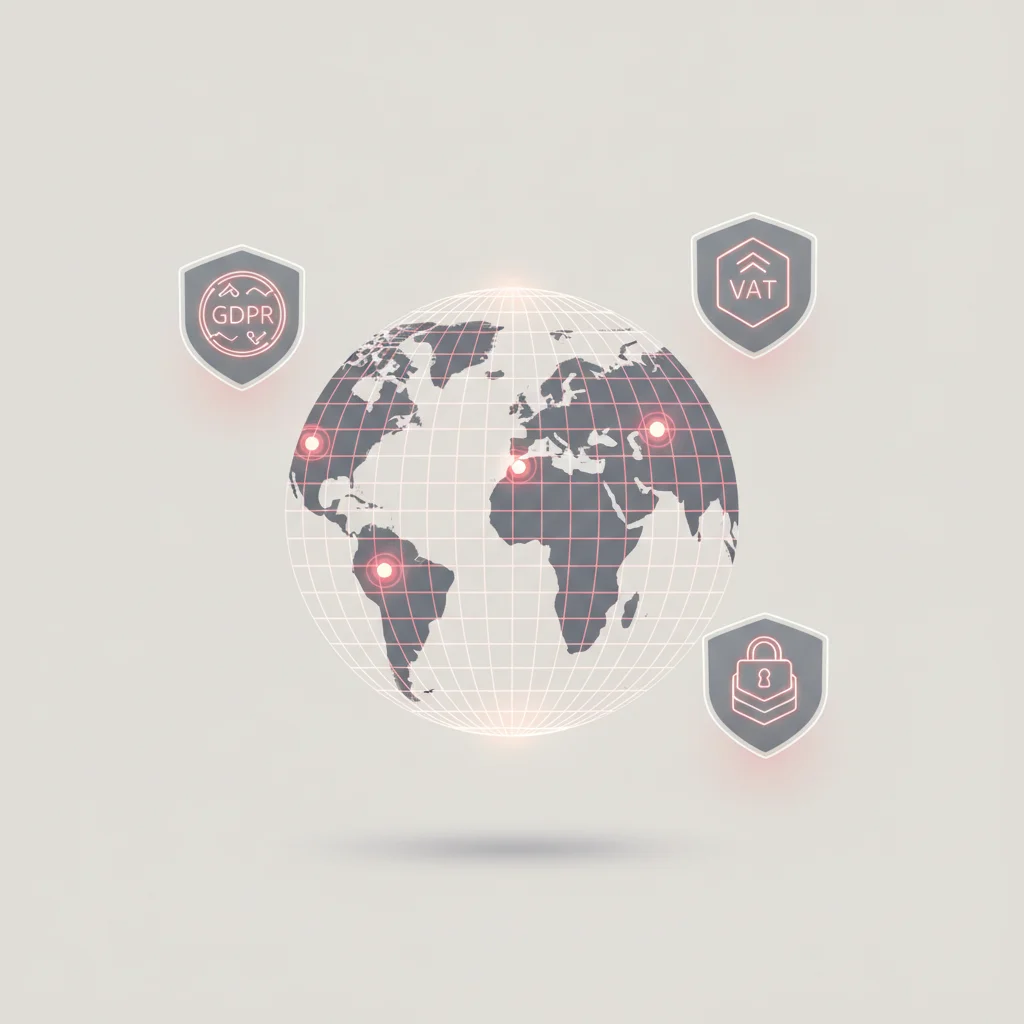
Selling digital products across international borders introduces complex cross-border tax compliance responsibilities. Under destination-based taxation models, digital goods are taxed where the consumer resides rather than where the selling business is registered.
Key tax frameworks that digital businesses must comply with include:
EU VAT on Digital Services: Businesses must calculate and charge the specific VAT rate of the buyer's home country. To simplify reporting, businesses can utilize the VAT One Stop Shop (OSS) system, allowing them to file a single quarterly return covering all EU sales rather than registering in individual EU member states.
UK VAT on Digital Downloads: Similar to the EU system, sales of digital downloads to UK consumers are subject to standard UK VAT, requiring registration and quarterly reporting to HMRC.
US State Sales Taxes: Following the landmark South Dakota v. Wayfair Supreme Court ruling, states enforce economic nexus laws. If your sales in a specific state exceed designated transaction counts or revenue thresholds (commonly $100,000 or 200 transactions annually), you must register, collect, and remit state-specific sales taxes.
UAE VAT on Electronic Services: Non-resident companies providing electronic services to UAE consumers must register for and collect UAE VAT on transactions, governed by the UAE Federal Tax Authority.
To manage this complex tax landscape without a massive accounting department, integrate automated tax calculation engines like TaxJar, Avalara, or Quaderno into your checkout stack, ensuring real-time tax calculation and reporting.
Ensuring GDPR and CCPA Compliance in User Data Collection
Digital product merchants process high volumes of Personally Identifiable Information (PII), including buyer names, physical addresses, billing details, and interaction data tracking course completion. Consequently, operations must comply with major global data privacy frameworks: General Data Protection Regulation (GDPR) in Europe, the California Consumer Privacy Act (CCPA) in the United States, and local data protection regulations like KVKK in Turkey.
Under these regulations, businesses must obtain active, explicit consent before activating cookies, analytics scripts, or tracking pixels. Avoid pre-checked boxes on checkout and registration pages. Additionally, clearly state how user data is gathered, stored, and utilized within a highly accessible Privacy Policy document.
                       GDPR Compliance Framework
┌─────────────────────────────────────────────────────────────┐
│                   Active Consent Opt-In                     │
│      • Independent selection boxes (No pre-checked fields)  │
│      • Granular options for marketing vs. functional data   │
├─────────────────────────────────────────────────────────────┤
│                   Data Processing Records                   │
│      • Securely store processing history log databases      │
│      • Track timestamps and explicit consent types          │
├─────────────────────────────────────────────────────────────┤
│                   User Portability & Deletion               │
│      • Implement clear mechanisms for data retrieval        │
│      • Automated processes for user deletion (Forgotten)    │
└─────────────────────────────────────────────────────────────┘
Your system must also support data portability and the right to be forgotten. If an international customer requests that their personal records be deleted, you must provide a clean process to purge their student profile, transaction history, and download logs from your active database within the legally required timeframes, while preserving required tax records under secure, pseudonymized formats.
Using Merchant of Record (MoR) Services to Offload Liability
For many growing digital product organizations, managing international tax calculations, filing returns in dozens of countries, and keeping up with regional compliance laws creates a massive administrative burden. An effective solution is using a Merchant of Record (MoR) service like Paddle, Lemon Squeezy, or FastSpring.
An MoR acts as the legal entity selling your digital products to the end consumer. When a buyer initiates a checkout, the transaction is processed through the MoR's account, which assumes legal responsibility for the sale. The MoR dynamically calculates, collects, and remits the correct taxes (VAT, Sales Tax, GST) to the appropriate global tax authorities, insulating your business from compliance risks.
Using an MoR simplifies bookkeeping, as you receive a single consolidated payout each month, with the MoR handling payment gateway fees, chargebacks, fraud screening, and tax reporting. This setup allows your internal team to focus entirely on content creation, product engineering, and customer acquisition.
Corporate Strategies for Scaling Digital Sales
Leveraging API Integrations with CRM Systems
Scaling a digital product business from manual operations to an enterprise-grade sales engine requires integrating your commerce backend with leading Customer Relationship Management (CRM) platforms like Salesforce, HubSpot, or ActiveCampaign. Rather than treating checkout transactions as isolated events, use custom API endpoints and webhooks to synchronize buyer data across your entire software ecosystem.
Integrating your platforms enables advanced customer lifecycle messaging. When a student registers for a course, their completion rate, quiz scores, and course login patterns can be tracked and pushed directly to your CRM. If your system identifies that a student has not accessed their training program for several days, it can automatically trigger a personalized email encouragement campaign.
[Student Progresses in LMS]
            │
            ▼
 [Course Progress Hook Fires]
            │
            ▼
 [HubSpot / CRM Profile Updated] ──► [Lead Score Elevated]
                                              │
                                              ▼
                             [Sales Team Automated Notification]
Similarly, analyzing user download patterns for ebooks lets you segment your customer base for future marketing campaigns. A buyer who downloads an ebook on a specific technical subject can be automatically placed into a targeted, automated pipeline that suggests related premium courses, maximizing customer lifetime value (LTV).
Establishing B2B Corporate Licensing Models
While selling single licenses to individual consumers is highly profitable, targeting corporate B2B clients can unlock much larger revenue opportunities. Corporate buyers often purchase access for entire departments or client portfolios rather than single licenses. To tap into this market, you need to offer dedicated B2B corporate licensing systems.
This model requires updating your technical and legal frameworks to support multi-seat access. Instead of requiring separate purchases for each user, provide corporate managers with a dedicated admin portal. This dashboard allows corporate buyers to purchase bulk license packages and distribute access via unique registration codes, domain-whitelisted email domains, or SSO portals.
Furthermore, adapt your pricing models to appeal to enterprise buyers. Offer tiered pricing matrices where the price-per-user drops as the organization purchases more seats. By combining custom corporate invoicing with modern enterprise authentication protocols (like SAML or OIDC), you can position your digital catalog as a highly secure, easy-to-deploy training solution for corporate enterprises globally.
Frequently Asked Questions
What is the most secure way to host an online course?
The most secure approach involves using a dedicated Learning Management System (LMS) with secure hosting, encrypted HLS video streaming (using AES-128), tokenized URL links, and multi-factor or SSO authentication to prevent unapproved account access.
Do businesses need to charge tax on digital downloads?
Yes, most jurisdictions, including the EU (VAT), US (state sales taxes under economic nexus rules), and the UK, require taxing digital downloads based on the buyer's location rather than the seller's.
How can we prevent users from sharing account credentials?
Prevent account sharing by implementing JWT (JSON Web Token) expiration limits, restricting concurrent logins from multiple IP addresses, integrating device fingerprinting, and requiring multi-factor authentication (MFA) on new logins.
What is the difference between a Payment Processor and a Merchant of Record?
A standard payment processor only moves money and charges processing fees, leaving tax liability to you. A Merchant of Record (MoR) acts as the legal seller, assuming responsibility for global tax compliance, collection, calculation, and remittance.
Can we use PDF stamping to prevent ebook piracy?
PDF stamping is a non-invasive watermark technique that embeds the buyer’s email, order ID, and IP address into the document. While it doesn't physically lock the file like Adobe DRM, it acts as a strong psychological deterrent against sharing.
What are the video hosting options for premium course platforms?
Premium courses should not use public platforms like YouTube or Vimeo Basic. Instead, opt for enterprise-level video platforms like Vimeo Enterprise, Wistia, or AWS Elemental MediaPackage which support domain-level restriction, encrypted HLS, and dynamic watermarking.
How do we comply with GDPR when selling digital products?
To comply with GDPR, obtain active consent before tracking user behavior, offer clear privacy policies, allow users to download their personal data, and implement procedures to delete user records (the right to be forgotten) upon request.
Is a self-hosted LMS better than a SaaS LMS platform?
Self-hosted platforms like WordPress with LearnDash offer complete ownership and customizability but require manual security maintenance and hosting configuration. SaaS platforms like Kajabi or Teachable handle security and updates automatically but impose platform limitations and transaction fees.