
What Is Endpoint Security?
Endpoint security protects devices like laptops and servers from cyber threats. It uses advanced protocols to secure network entry points against unauthorized access.

ON THIS PAGE
0% read
- Understanding the Basics: What Is Endpoint Security?
- What Devices Are Considered "Endpoints"?
- Why Is Endpoint Security Critical for Modern Businesses?
- How Does Endpoint Security Work?
- The Core Components of Endpoint Protection
- Legacy Antivirus vs. Modern Endpoint Security
- Best Practices for Implementing Endpoint Security
Endpoint security protects devices like laptops and servers from cyber threats. It uses advanced protocols to secure network entry points against unauthorized access. As corporate networks expand beyond traditional office boundaries, every device connected to your infrastructure represents a potential entry point for sophisticated threat actors. This comprehensive guide provides business owners, IT directors, and technical decision-makers with an exhaustive, technically rigorous analysis of endpoint security architectures, deployment strategies, and industry-standard practices necessary to secure the modern enterprise edge against increasingly complex threats.
Understanding the Basics: What Is Endpoint Security?

Endpoint security is the strategic and technological practice of securing the individual entry points—known as endpoints—that connect to a corporate network. An endpoint refers to any device capable of executing processes, maintaining an IP address, and communicating across local or wide-area networks. In the modern enterprise, these range from traditional desktop computers and high-performance database servers to mobile smartphones, virtual desktop infrastructure (VDI) instances, and automated IoT systems. The primary objective of endpoint security is to prevent, detect, investigate, and remediate unauthorized access, malware executions, data exfiltration, and malicious lateral movements directly on the host level.
Historically, organizations relied almost exclusively on perimeter-based security systems. The "castle-and-moat" paradigm assumed that everything inside the physical office network was inherently trusted, while everything outside was hostile. Firewalls and secure web gateways stood as the castle walls, scanning traffic as it entered or exited the local network. However, as business operations migrated to decentralized environments, this approach proved entirely inadequate. Today, endpoints function as their own micro-perimeters. When an employee connects a corporate laptop to an unsecure home Wi-Fi network, or accesses a cloud-hosted database from a mobile device, the traditional network firewall is bypassed entirely. Endpoint security ensures that defensive capabilities travel with the device, regardless of physical location or network topology.
At its core, endpoint security operates through locally installed software agents that communicate continuously with a centralized administrative console. This centralized hub, typically managed as a cloud-native software-as-a-service (SaaS) platform, acts as the control plane. Security engineers use the console to configure global security profiles, deploy policy updates, monitor real-time security alerts, and execute remote response actions across the entire enterprise fleet. The local endpoint agent runs as a persistent service, monitoring kernel-level operations, system registry modifications, local file systems, and network connections to identify and intercept unauthorized activity in real-time.
Modern endpoint security systems go far beyond simple file scanning. They integrate real-time behavior tracking, automated isolation protocols, memory protection mechanisms, and predictive threat intelligence loops. By leveraging machine learning models directly on the host and in the cloud, these solutions can differentiate between legitimate administrative utilities and malicious, dual-use tools (a tactic known as "living off the land"). This granular level of visibility and control is what makes endpoint security the absolute cornerstone of any modern, resilient information security program.
What Devices Are Considered "Endpoints"?
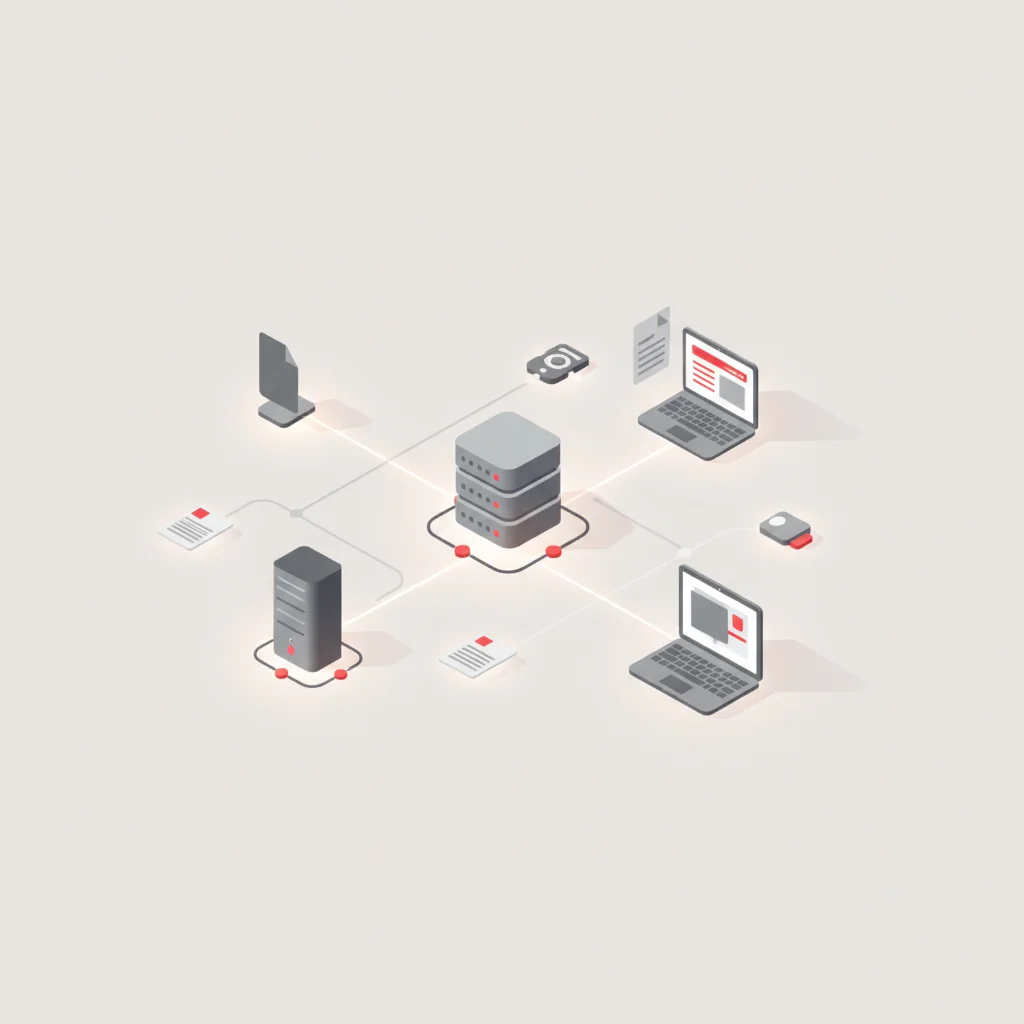
To build an effective defense strategy, organizations must first accurately map their attack surface. Any device that acts as a terminal point for communication on a corporate network is classified as an endpoint. If a device can run an operating system and connect to your internal assets, it must be inventoried, managed, and secured.
Traditional Endpoints
Traditional endpoints represent the foundational computing power of the enterprise. This category includes physical desktop computers, corporate laptops running Windows, macOS, or Linux, and physical or virtualized bare-metal servers. Servers, specifically web, application, and database servers, represent high-value targets because they store intellectual property, financial records, and sensitive personally identifiable information (PII).
Securing traditional endpoints requires specialized configuration policies. While user workstations are optimized for interactive tasks, productivity suites, and web browsing, servers are highly specialized machines running predictable, repetitive workloads. Consequently, security teams apply strict application control, file integrity monitoring (FIM), and rigorous host-based intrusion prevention systems (HIPS) to servers, while user workstations require more dynamic, behavior-based protection engines to handle the unpredictable nature of daily human activity.
Mobile and Remote Devices
The rise of hybrid work models and Bring Your Own Device (BYOD) programs has led to an explosion of mobile endpoints, including smartphones, tablets, and ruggedized handheld scanners. These devices run highly sandboxed operating systems like iOS and Android, which present unique security and architectural challenges. Because standard enterprise-grade security agents cannot run with kernel-level privileges on mobile operating systems without root-access (which compromises the built-in security of the OS), security must be handled differently.
Mobile endpoint security relies on Mobile Threat Defense (MTD) solutions integrated with Unified Endpoint Management (UEM) or Mobile Device Management (MDM) platforms. This dual-layered framework allows organizations to enforce device compliance—such as requiring biometric authentication, verifying that disk encryption is active, and checking that the OS has not been jailbroken or rooted—while isolating corporate data within secure, encrypted containers. If an employee's personal phone is compromised by a malicious mobile application, the secure container prevents the malware from accessing corporate email, internal chat channels, or cloud databases.
IoT and Specialized Devices
The Internet of Things (IoT) and Operational Technology (OT) represent one of the most volatile and rapidly expanding segments of the enterprise attack surface. This category includes smart office equipment (such as printers, smart TVs, and video conferencing systems), medical diagnostic machinery, smart building automation systems (HVAC, security cameras), and industrial control systems (ICS/SCADA) on manufacturing floors.
Unlike traditional computers, IoT and OT devices typically run on minimal hardware with stripped-down, proprietary firmware. Many of these systems lack the processing power, memory, or open operating system architectures required to install a local security agent. Furthermore, firmware updates are rarely issued by manufacturers, leaving known vulnerabilities unpatched for years. Securing these specialized endpoints requires a network-centric approach. Organizations must use agentless endpoint discovery tools to continuously scan network traffic, dynamically profile IoT behavior, and isolate these devices within strictly micro-segmented networks to prevent threat actors from using a compromised smart camera as a stepping stone into the core corporate domain.
Why Is Endpoint Security Critical for Modern Businesses?
As organizations embrace cloud-first architectures and distributed workforces, the critical nature of robust endpoint security cannot be overstated. With the traditional perimeter gone, endpoints are the primary targets for global threat actors looking to gain an initial foothold inside your corporate environment.
The Dissolving Network Perimeter
In the past, securing an organization meant building a strong boundary around the corporate office. If an employee was inside the building and plugged into the local network, their traffic was routed through a stack of enterprise-grade security appliances. Today, this model is completely obsolete. Modern business is decentralized; employees access critical SaaS platforms, cloud-based ERP systems, and production codebases from their home offices, public transit, hotels, and cafes.
Because corporate traffic no longer flows through a centralized physical choke point, the traditional network firewall cannot defend your assets. If an off-network laptop is compromised via a malicious email attachment while connected to a public hotspot, that device becomes a Trojan horse. The moment the user connects to the corporate VPN, the threat actor can begin moving laterally across the internal network. By shifting the defensive perimeter directly to the endpoint itself, you ensure that security policies, real-time scanning, and containment mechanisms remain active and operational, regardless of where the device is located or what network it uses.
The Rising Cost of Data Breaches and Ransomware
The financial, operational, and reputational consequences of an endpoint compromise can be catastrophic for organizations of any size. Ransomware attacks, which almost always begin with a compromised endpoint (via a spear-phishing email, a drive-by download, or exposed remote desktop credentials), have evolved into highly coordinated, professionalized criminal enterprises. Modern threat actors do not just encrypt files; they engage in double and triple extortion, exfiltrating sensitive corporate data before locking the systems and threatening to leak it publicly or contact your customers directly if the ransom is not paid.
According to global cybersecurity studies, the average cost of an enterprise data breach is now measured in millions of dollars. This figure includes direct forensic investigation costs, legal fees, regulatory penalties, business disruption, system rebuilding expenses, and long-term customer churn. For small and medium-sized businesses, the impact is even more severe; many organizations are forced to cease operations permanently within six to twelve months of a major breach. Implementing automated endpoint protection, threat detection, and rapid isolation protocols is not merely an IT line item—it is a fundamental business continuity requirement.
Compliance and Regulatory Requirements
Global data protection and privacy frameworks have established strict, legally binding rules regarding how organizations secure personal data. Regulatory bodies worldwide are holding executives and board members personally accountable for security failures. Frameworks such as the European Union’s General Data Protection Regulation (GDPR), the California Consumer Privacy Act (CCPA), the Health Insurance Portability and Accountability Act (HIPAA), and various national cybersecurity laws demand that organizations deploy state-of-the-art security measures to protect sensitive data.
Endpoints are the primary locations where sensitive data is processed, viewed, and stored by employees. If an unencrypted laptop containing customer records or proprietary patient data is lost, stolen, or compromised, the organization faces severe regulatory penalties, mandatory public disclosures, and potential lawsuits. Modern endpoint security solutions help businesses maintain compliance by enforcing full disk encryption, tracking data handling via built-in Data Loss Prevention (DLP) modules, and maintaining immutable logs of all system events to simplify compliance reporting and post-incident forensic audits.
How Does Endpoint Security Work?
To understand the mechanics of endpoint security, it is necessary to examine how the local agent interacts with both the host operating system and the centralized cloud console. The process is a continuous loop of data collection, real-time evaluation, and automated response.
The workflow begins with telemetry ingestion. The endpoint agent, running with administrative or kernel-level privileges, continuously monitors low-level system activity. This includes tracking process creations (such as a command-line utility being launched by a PDF reader), registry modifications, network socket connections, file reads and writes, and memory allocations. Rather than processing all this data locally—which would exhaust the device's CPU and RAM—the agent filters the telemetry, performing basic local evaluations while streaming structured metadata to a highly scalable, cloud-native analytics backend.
Once the data reaches the cloud console or local evaluation engines, it is analyzed using a multi-layered detection hierarchy:
Signature and Hash Matching: The system immediately checks files against known lists of malicious hashes. While basic, this quickly filters out commodity malware.
Heuristic and Behavioral Analysis: The system looks at what a process is doing, rather than what it looks like. For example, if a legitimate system utility suddenly attempts to encrypt files in rapid succession or inject code into another running process, the behavioral engine flags it as highly suspicious.
Machine Learning Classifiers: Supervised and unsupervised machine learning algorithms analyze complex patterns of execution telemetry in real-time, matching them against known attack frameworks (such as the MITRE ATT&CK matrix) to identify novel, zero-day threat patterns that have never been seen before.
Threat Intelligence Integration: Global threat feeds continuously update the detection engine with newly discovered Indicators of Compromise (IoCs), such as IP addresses, domains, and specific file patterns associated with active nation-state or cybercriminal campaigns.
If a threat is detected, the endpoint security agent initiates immediate, pre-configured mitigation protocols. The system does not wait for a human security analyst to log in and review the alert; instead, it can automatically terminate the malicious process, quarantine the offending files, delete unauthorized registry keys, and roll back changes to their last-known safe state.
In severe scenarios, such as an active ransomware propagation attempt, the agent can trigger network isolation. This disconnects the compromised endpoint from all internal network routes and cloud assets, while maintaining a single secure channel back to the administrative console. This allows security teams to run remote forensics and clean the machine without risking lateral infection to other corporate assets.
The Core Components of Endpoint Protection
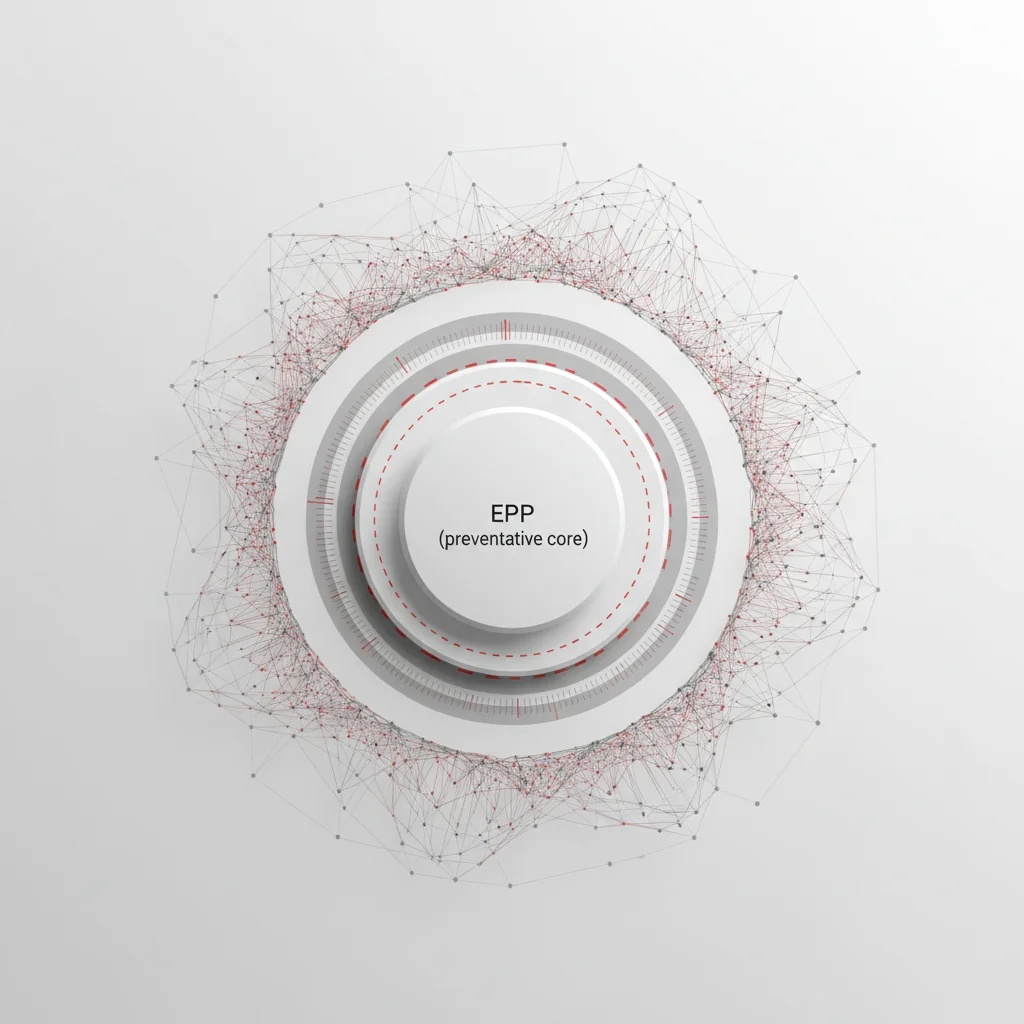
As the threat landscape has matured, endpoint security has evolved from basic, standalone antivirus programs into a highly sophisticated, layered ecosystem. Understanding the distinctions between the core components of modern endpoint security is essential for choosing the right defense profile.
Endpoint Protection Platform (EPP)
The Endpoint Protection Platform (EPP) is the foundational, preventive layer of your endpoint defense strategy. Its primary objective is to block incoming threats at the perimeter of the device before they can execute and compromise the host. EPP solutions are highly effective at neutralizing known threats, commodity malware, and simple scripting attacks.
+---------------------------------------------------------+
|                Endpoint Protection (EPP)                |
|  +-------------------+  +----------------------------+  |
|  | Signature Match  |  | Host Firewall & Web Filter |  |
|  +-------------------+  +----------------------------+  |
|  | Device Control    |  | Basic Heuristics Engine    |  |
|  +-------------------+  +----------------------------+  |
+---------------------------------------------------------+
                          |
                          v
+---------------------------------------------------------+
|           Endpoint Detection & Response (EDR)           |
|  +-------------------+  +----------------------------+  |
|  | Continuous Logging|  | Behavior Analysis (AI/ML)  |  |
|  +-------------------+  +----------------------------+  |
|  | Root-Cause Audit  |  | Active Isolation Tools     |  |
|  +-------------------+  +----------------------------+  |
+---------------------------------------------------------+
                          |
                          v
+---------------------------------------------------------+
|           Extended Detection & Response (XDR)           |
|  +-------------------+  +----------------------------+  |
|  | Email Telemetry   |  | Cloud Workload Analytics   |  |
|  +-------------------+  +----------------------------+  |
|  | Network Logs      |  | Identity & Access (IAM)    |  |
|  +-------------------+  +----------------------------+  |
+---------------------------------------------------------+
A robust EPP includes features such as:
Host-Based Firewalls and Intrusion Prevention: Controls incoming and outgoing network traffic on the device level, blocking unauthorized port scans and protocol exploits.
Device Control: Allows administrators to restrict or block physical ports (such as USB drives) to prevent physical malware injection or data exfiltration.
Web Content Filtering: Blocks access to known phishing domains, malicious download sites, and inappropriate web content directly at the browser layer.
Data Loss Prevention (DLP): Monitors and controls the movement of sensitive data (e.g., credit card numbers, source code) to prevent unauthorized copy-paste actions, email attachments, or cloud uploads.
By handling the vast majority of common threats automatically, the EPP serves as an essential filter, allowing security analysts to focus their time and resources on more complex, targeted attacks.
Endpoint Detection and Response (EDR)
While EPP focuses on prevention, Endpoint Detection and Response (EDR) assumes that some threats will inevitably bypass your initial defenses. EDR is designed around the concept of "assume breach." Its primary purpose is to provide continuous visibility, behavioral analysis, and rapid response capabilities for threats that have successfully executed on an endpoint.
EDR operates like a flight data recorder for your devices. It continuously logs system activity, building a historical record of events. If a threat actor uses an advanced, fileless attack technique—such as executing malicious code directly in the system's memory using legitimate administrative tools—the EPP might not block it because no malicious file was written to the disk.
The EDR engine, however, detects the anomalous behavior (such as an administrative tool attempting to dump local credential databases from memory) and immediately flags the activity. It provides security teams with a visual representation of the attack path, showing exactly how the threat entered, what files it touched, what network connections it made, and how to neutralize it completely.
Extended Detection and Response (XDR)
Extended Detection and Response (XDR) represents the next logical step in the evolution of enterprise security. While EDR provides unparalleled visibility into endpoints, it is inherently limited to what happens on the host itself. Threat actors, however, do not operate in a vacuum; their attack campaigns span across emails, cloud networks, identity systems, and database workloads.
XDR breaks down traditional security silos by collecting and automatically correlating telemetry from multiple security layers, including:
Endpoints: Workstations, laptops, and servers.
Network Security: Firewalls, secure web gateways, and intrusion detection systems.
Cloud Security: Virtual machines, containerized workloads, and serverless architectures.
Email Security: Spam filters, phishing detection systems, and secure email gateways.
Identity and Access Management (IAM): Active Directory, SSO providers, and access control logs.
By consolidating this diverse telemetry into a single, unified analytics engine, XDR can connect seemingly unrelated events. For example, a suspicious login attempt on a cloud console, followed minutes later by a strange registry change on an endpoint, and an unusual outbound network connection to an external IP, might each be dismissed as low-severity alerts when viewed in isolation.
XDR correlates these events into a single, cohesive timeline, recognizing them as different stages of a highly coordinated attack. This allows security operations centers (SOCs) to drastically reduce their average mean time to detect (MTTD) and mean time to respond (MTTR).
Legacy Antivirus vs. Modern Endpoint Security
Many organizations mistakenly believe that having a traditional antivirus (AV) license installed on their corporate laptops is sufficient to protect them from modern cyber threats. Understanding the technical limitations of legacy AV compared to modern endpoint security is critical for managing business risk effectively.
Legacy antivirus software relies almost exclusively on static signature matching. When a new malware variant is discovered in the wild, cybersecurity vendors analyze the file, generate a unique mathematical fingerprint (a hash value), and add it to a master signature database. The AV software on user devices regularly downloads these database updates and scans local storage. If a file's hash matches a signature in the database, the software flags it as malicious and deletes it.
The fatal flaw of this approach is that it is entirely reactive. Legacy AV cannot block a threat until after that threat has already been identified, analyzed, and added to a signature database. This leaves organizations completely exposed to zero-day exploits—vulnerabilities that are actively exploited before a patch or signature is available.
Furthermore, modern cybercriminals use automated tools to dynamically alter the file structure of their malware every time it is downloaded. By changing a single byte of code, the file's hash value changes completely, rendering it invisible to signature-based legacy AV, even though its malicious payload remains identical.
Modern endpoint security platforms rely on a "behavior-first" methodology. Instead of asking "What is this file?", they ask "What is this file trying to do?". By leveraging real-time behavioral analysis, machine learning algorithms, and live threat intelligence networks, modern solutions can identify malicious intent based on action patterns rather than static code.
If an unknown script attempts to modify boot configurations, establish an outbound connection to an unverified IP address, and begin scanning local directories for database files, modern endpoint security will intercept and block the process immediately, regardless of whether the file has a known signature.
Best Practices for Implementing Endpoint Security
Deploying an endpoint security solution is not a "set-and-forget" project. To maximize your return on investment and build a resilient defense posture, your organization should adhere to established industry frameworks and deployment best practices.
Enforcing a Zero Trust Architecture
The foundation of modern endpoint security is the implementation of a Zero Trust architecture. The core tenet of Zero Trust is simple: "never trust, always verify." No device, user, or application should be trusted by default, regardless of whether they are physically inside the corporate office or connecting remotely.
To apply Zero Trust to endpoint security, organizations must implement strict, dynamic device posture checks. Before an endpoint is granted access to corporate networks, cloud platforms, or internal databases, it must undergo automated verification. The system checks:
Authentication and Identity: Is the user logging in from a known, authorized identity using robust Multi-Factor Authentication (MFA)?
Device Health and Compliance: Is the operating system fully patched? Is the endpoint security agent active and running the latest policy definitions? Is full disk encryption enabled?
Access Context: Is the connection request coming from an expected physical location at a reasonable time?
If a device fails any of these checks—for example, if an employee attempts to access the code repository from a personal laptop that lacks a security agent or has an outdated operating system—access is denied. Instead of a blanket connection, the device is restricted to a quarantined guest network where it can run necessary updates and restore compliance.
Implementing Patch Management and Updates
Unpatched software vulnerabilities represent the single easiest entry point for malicious actors. When software developers discover security flaws in operating systems, web browsers, office productivity suites, or development frameworks, they release security patches to close these gaps. Threat actors closely monitor these releases, reverse-engineer the patches, and quickly develop exploits targeting organizations that are slow to update their fleets.
An effective endpoint security strategy must include automated, risk-based patch management. Organizations should establish clear Service Level Agreements (SLAs) for patch deployment, prioritizing vulnerabilities based on their severity and active exploitation status in the wild.
                  +-----------------------------------+
                  |   Continuous Vulnerability Scan   |
                  +-----------------------------------+
                                    |
                                    v
                  +-----------------------------------+
                  |  Prioritize by Severity & Exploit  |
                  +-----------------------------------+
                                    |
                                    v
                  +-----------------------------------+
                  | Test Patch in Staging Environment |
                  +-----------------------------------+
                                    |
                  +-----------------+-----------------+
                  |                                   |
                  v                                   v
        [ Critical / High ]                   [ Medium / Low ]
     (Deploy within 72 Hours)              (Deploy in Standard Cycle)
                  |                                   |
                  +-----------------+-----------------+
                                    v
                  +-----------------------------------+
                  |    Verify and Audit Compliance    |
                  +-----------------------------------+
Critical and actively exploited vulnerabilities should be patched within 72 hours of release, while standard security updates can be deployed in structured weekly or monthly cycles. Modern endpoint security platforms often include built-in vulnerability scanning modules, allowing IT administrators to easily identify unpatched software across the entire fleet from a single, centralized dashboard.
Employee Training and Awareness
Technology alone cannot solve every security challenge. The human element remains a primary target for threat actors. Phishing emails, social engineering campaigns, and physical media drops (such as leaving a malicious USB drive in a corporate parking lot) are designed specifically to bypass your technical defenses by tricking employees into executing unauthorized actions.
A comprehensive endpoint security strategy must invest in continuous, engaging security awareness training. Rather than relying on boring, annual compliance slide decks, organizations should implement:
Frequent Phishing Simulations: Send safe, simulated phishing emails to employees under realistic conditions to test their ability to recognize and report suspicious messages.
Role-Based Security Training: Provide customized training tailored to specific user groups. Finance departments need training on invoice fraud and business email compromise (BEC), software developers require training on secure coding and dependency vulnerability management, and executives must be trained on high-profile spear-phishing and credential harvesting threats.
Clear Incident Reporting Channels: Ensure that employees know exactly how to report a suspected incident, and foster an organizational culture that encourages quick reporting without fear of punishment or blame.
Frequently Asked Questions
What is an example of endpoint security software?
Industry-standard examples of modern endpoint security software include CrowdStrike Falcon, Microsoft Defender for Endpoint, SentinelOne Singularity, and Palo Alto Networks Cortex XDR. These platforms provide unified endpoint protection (EPP) and detection and response (EDR) capabilities through a single, lightweight agent.
Does a VPN provide endpoint security?
No, a Virtual Private Network (VPN) does not provide endpoint security. A VPN only encrypts the data tunnel between a device and a network, protecting data in transit from eavesdropping, but it cannot prevent a local malware infection or stop a compromised device from spreading threats.
Can endpoint security detect zero-day vulnerabilities?
Yes, modern endpoint security solutions leveraging Endpoint Detection and Response (EDR) can detect zero-day exploits. By analyzing system behaviors, process structures, and memory modifications in real-time, these tools block malicious actions even if the threat has no known signature.
What is the difference between an endpoint and a gateway?
An endpoint is any individual user or server device where data is processed, such as a laptop or smartphone. A gateway is a network point that connects distinct network environments, such as a router, firewall, or proxy server, filtering traffic as it passes through.
Why is legacy antivirus no longer sufficient for modern businesses?
Legacy antivirus software relies on signature matching, which only blocks known, static files. It is completely blind to modern threats like zero-day exploits, fileless malware executing in memory, and dynamic code variations that alter file hashes instantly.
How does endpoint security support regulatory compliance like GDPR?
Endpoint security supports compliance by enforcing full disk encryption, preventing data leaks through Data Loss Prevention (DLP) policies, and maintaining immutable audit logs of all device activity to simplify forensic reviews and satisfy mandatory breach notification rules.
What are the primary deployment options for endpoint security consoles?
Modern endpoint security consoles are predominantly deployed as cloud-native SaaS platforms, which offer unlimited scalability, instant updates, and global visibility. For highly regulated, air-gapped environments, some vendors still support on-premises or hybrid private cloud models.
How does endpoint isolation work during an active security incident?
During an active security incident, an analyst or automated policy can isolate the compromised endpoint. The agent terminates all network communication to corporate assets and public internet, leaving open only a single, secure tunnel back to the admin console for remote forensic cleanups.